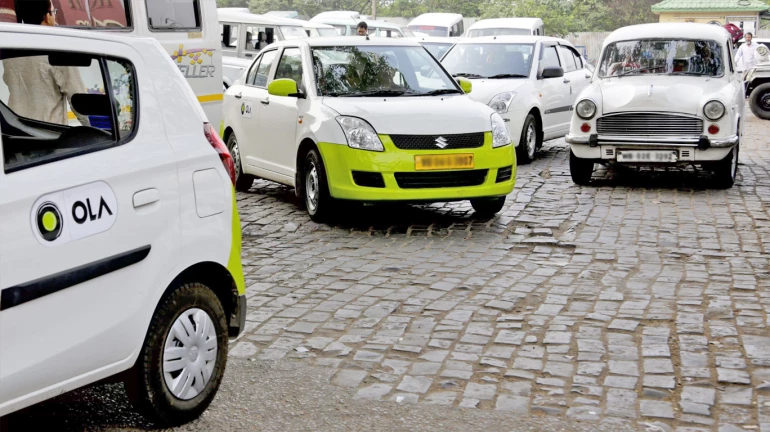


The Maharashtra government has notified the Maharashtra Motor Vehicle Aggregator (MVA) Rules, 2026, introducing a comprehensive regulatory framework for app-based passenger transport services such as Ola, Uber and Rapido.
The new policy makes licences mandatory for aggregators, regulates fares, strengthens passenger safety, guarantees drivers a larger share of earnings and introduces a legal framework for private carpooling. It also promotes electric mobility and aims to create more employment opportunities for local youth.
Transport Minister Pratap Sarnaik said the rules are intended to make app-based transport services safer, more transparent and accountable while protecting the interests of both passengers and drivers.
All app-based transport aggregators operating in Maharashtra will now be required to secure a licence from the State Transport Authority before offering services. Each licensed operator will receive a Unique Licence Identification Number (ULIN).
The state government will also launch a dedicated online portal to monitor aggregator vehicles in real time through GPS tracking, verify drivers and take prompt action against violations.
Existing licences issued under the earlier framework will remain valid for 60 days from the notification of the new rules or until fresh licence applications are processed.
The new regulations place a strong emphasis on passenger safety and service standards.
Every aggregator must operate a 24x7 customer support centre, appoint a grievance redressal officer and resolve complaints within the prescribed timeline.
The rules also require:
Every vehicle registered on an aggregator platform must carry valid permits, insurance, fitness certificates, Pollution Under Control (PUC) certificates, cleared e-challans, AIS-140 compliant GPS tracking devices with panic buttons and first-aid kits.
One of the biggest changes under the policy is the protection of drivers' earnings.
Aggregators must ensure that drivers receive at least 80% of the total fare paid by passengers. Under the convenience-fee model, drivers must receive 95% of the base fare, limiting the commission retained by platform operators.
Drivers are also required to possess a valid driving licence and commercial badge, complete mandatory training and cannot drive for more than 12 consecutive hours.
The policy allows drivers to work with multiple aggregator platforms.
To prevent arbitrary pricing, the Regional Transport Authority (RTA) will determine the base fare for app-based transport services.
Under the new rules:
The government says these measures will ensure transparent and fair pricing for passengers while preventing predatory discounting.
The government has introduced stringent enforcement measures for aggregators that fail to comply with the new regulations.
Authorities can suspend or cancel licences for repeated violations involving passenger safety, fare manipulation or other operational lapses.
Financial penalties ranging from ₹1 lakh to ₹1 crore may also be imposed depending on the seriousness of the offence.
The rules prescribe clear eligibility criteria for vehicles operating on aggregator platforms.
Vehicles must have valid registration, permits, insurance, fitness certificates and PUC certificates.
The government has also fixed an age limit:
To prevent the market from being dominated by large fleet operators, the government has introduced limits on vehicle ownership.
A single vendor can register:
According to the government, the move is intended to encourage greater participation by individual vehicle owners.
Commercial passenger transport drivers will be required to obtain a government-issued badge by submitting proof of Maharashtra residence, necessary documents and demonstrating practical knowledge of Marathi.
The government says the provision will improve communication with passengers while encouraging employment opportunities for Marathi-speaking youth.
To improve women's safety, female passengers using ride-pooling services will have the option of travelling exclusively with women drivers or women co-passengers.
In addition, all aggregator apps and websites must be available in Marathi, Hindi and English.
For the first time, Maharashtra has formally recognised private carpooling under a legal framework.
Private vehicle owners can offer carpooling services provided they do not make a profit. Participants will only be allowed to share travel expenses.
The government believes the move will reduce traffic congestion, lower pollution and provide commuters with a more affordable travel option.
The policy also encourages aggregators to gradually increase the share of electric and alternative-fuel vehicles in their fleets.
Companies will also be required to include vehicles adapted for persons with disabilities as directed by the government.
Transport Minister Pratap Sarnaik said the new rules aim to create a balanced ecosystem that safeguards passengers, ensures fair treatment of drivers and promotes responsible growth of app-based transport services.
According to the government, the policy is expected to improve transparency in fare collection, strengthen passenger confidence, increase regulatory oversight and support the long-term development of urban mobility across Maharashtra.


 Share
Share Tweet
Tweet