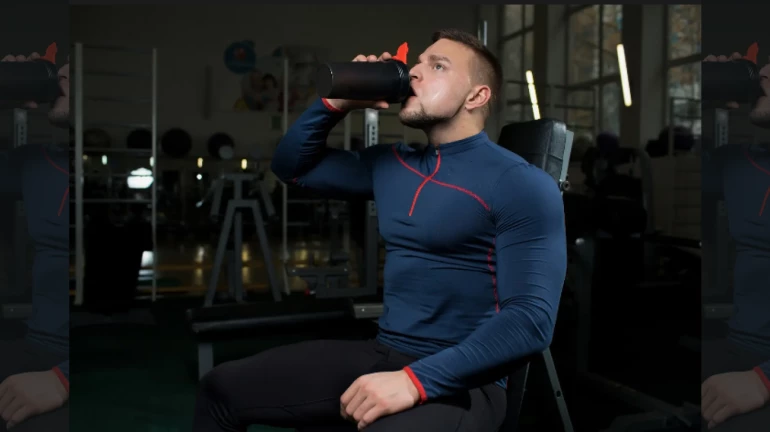


You've cleaned up your diet, you're training consistently, and you're hitting your protein targets every day. But somewhere along the way, your skin started breaking out — jawline, cheeks, maybe the back and shoulders too. If you've been wondering whether your whey protein shake is connected to those breakouts, you're not alone. A lot of men are asking the same question, and the answer is more nuanced than a simple yes or no.
The Link Between Whey Protein and Acne
Whey protein is derived from cow's milk. During processing, it retains certain growth factors and hormones naturally present in dairy — including IGF-1, or insulin-like growth factor 1. When you consume whey regularly, it can elevate IGF-1 levels in the body. This matters for skin because IGF-1 is known to stimulate sebum production and increase the rate at which skin cells turn over. More oil, faster cell buildup — that's a combination that can clog pores and trigger breakouts over time.
Whey also causes a noticeable spike in insulin levels after consumption. High insulin can signal the skin to produce more oil and may contribute to inflammation. This doesn't mean whey protein causes acne in every man who uses it, but for those who are already prone to breakouts or have sensitive, reactive skin, it can be a meaningful trigger worth paying attention to.
Why Some Men Are More Affected Than Others
Genetics play a real role here. Some men have skin that's more sensitive to hormonal shifts, meaning even a modest rise in IGF-1 or insulin can tip the balance toward breakouts. Others can consume whey daily without any visible skin response.
There are a few additional factors that can increase the likelihood of whey-related breakouts:
It's rarely just the protein in isolation. It's often the combination of internal hormonal shifts and a skin barrier that's already under stress.
What's Actually Happening in Your Skin
When breakouts appear consistently in the same areas — especially the jawline, chin, and back — it's often a sign of hormonal activity rather than a surface problem. The skin is simply expressing what's happening internally. Trying to treat this purely from the outside, by switching cleansers or adding more active ingredients, rarely resolves it.
The skin barrier plays a central role in how breakouts develop and persist. When it's functioning well, it regulates moisture, controls inflammation, and resists environmental irritants. When it's disrupted — by over-cleansing, overuse of exfoliants, or stress — it becomes more reactive. An already compromised barrier means that any hormonal fluctuation, including one triggered by diet, is more likely to result in visible breakouts.
Common Mistakes Men Make When Dealing With Protein-Related Breakouts
When breakouts start, the instinct is usually to do more. More washing, stronger products, more actives. This approach often makes things worse.
What Your Skin Actually Needs
If you suspect whey protein is contributing to your breakouts, the most useful first step is to reduce or temporarily eliminate it and observe how your skin responds over three to four weeks. This simple test gives you real information without guessing.
At the same time, support your skin barrier rather than attacking the breakouts directly. This means:
Some approaches, like Clear Ritual, focus specifically on keeping routines simple and barrier-friendly rather than layering on multiple active ingredients that can overwhelm reactive skin. This kind of approach tends to work better for men dealing with hormonally influenced breakouts, where the skin needs calm and consistency more than aggressive treatment.
Final Thoughts
Whey protein may well be contributing to your breakouts, but it's rarely the only factor at play. The more useful question is: what is your skin trying to tell you, and are you responding in a way that supports it or stresses it further?
Over time, with consistent and simplified care — and a willingness to look at what's happening internally, not just on the surface — skin tends to settle. The goal isn't perfect skin overnight. It's building habits that allow your skin to function the way it's meant to.


 Share
Share Tweet
Tweet