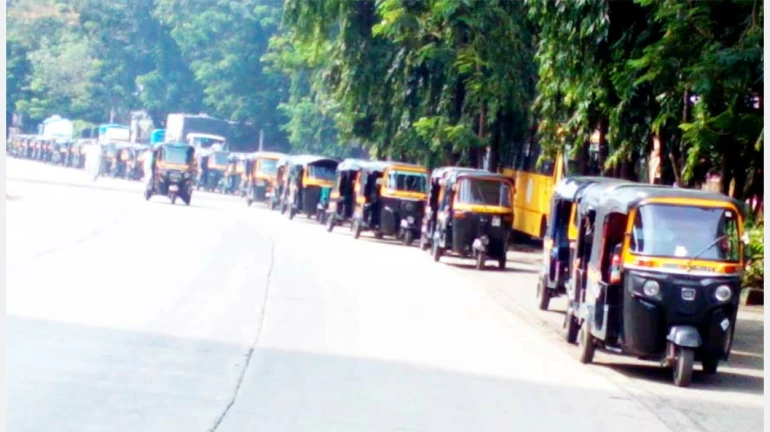


Authorities across Maharashtra, including Mumbai, have started a verification drive that may require taxi and auto-rickshaw drivers to pass a Marathi language test to keep their permits.
The campaign has begun in Mira Bhayandar as a pilot project and may be expanded across the state. Drivers who fail the test can lose their permits.
It will involve checking permits and domicile certificates. It also includes a mandatory Marathi language test. Drivers must show that they can read, write, and speak the language. The test is being conducted at Regional Transport Office (RTO) centres. Drivers are asked to write short paragraphs in Marathi for this.
Authorities will check more than 12,000 registered taxi and auto drivers in Bhayandar and Mira Road. The verification process will continue until May 1, which is Maharashtra Day. The RTO will submit the results after it.
The rule comes under Rule 24 of the Maharashtra Motor Vehicles Rules, 1989. This rule was amended in November 2019 to strengthen compliance. Earlier, drivers could submit a certificate from a Marathi language expert to meet the requirement. That option has now been removed.
This comes after concerns were raised that there were irregularities in the way licences, badges, and permits were issued. Officials also said that there were miscommunication issues between drivers and passengers. There have been reports of disputes due to language barriers when drivers do not understand Marathi.
Drivers will need to learn the language before appearing for the exam. The government has not announced any training support or grace period for such drivers.
The move has faced opposition from unions. Many drivers in these unions come from northern states. Union representatives said that language skills are usually checked through interaction during routine procedures and that such rules already exist.
A similar directive issued in 2016 was challenged by auto-rickshaw unions in the Mumbai Metropolitan Region. It was later struck down by the Bombay High Court, which called it illegal. It is not clear if the current drive, backed by the 2019 amendment, will face legal challenges or pass judicial review.
Other states also have similar rules. Tamil Nadu and Karnataka have required transport workers to know the local language as part of permit conditions. However, enforcement has not been consistent in these states.


 Share
Share Tweet
Tweet