The bench directed the state to submit a list of degraded forest lands where afforestation could be undertaken and indicated that it wants to develop a more accountable and locally focused model for environmental compensation.
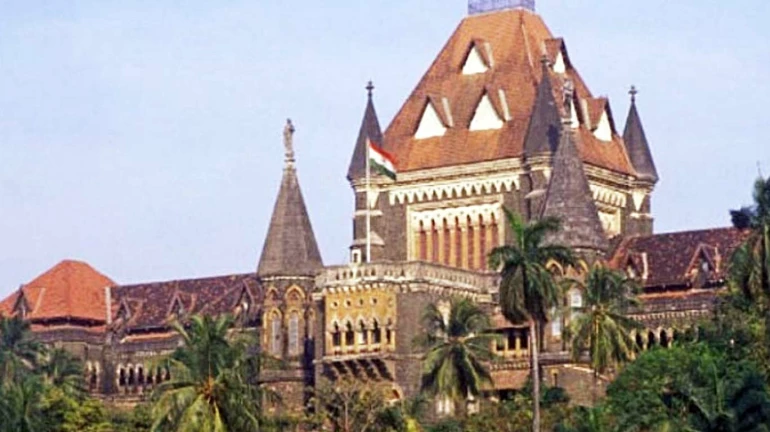
The Bombay High Court has raised serious concerns over the rapid loss of trees and mangrove forests in Mumbai and the Mumbai Metropolitan Region (MMR), warning that unchecked environmental degradation could one day force residents to rely on oxygen cylinders.
During a hearing on Tuesday, July 14, a division bench comprising Acting Chief Justice Ravindra V. Ghuge and Justice Gautam Ankhad remarked that "the day is not far when people may have to carry oxygen cylinders on their backs and take oxygen shots every three hours" if the city's green cover continues to decline.
Court Examines Mangrove Felling for Bullet Train Project
The observations came while the court was hearing a petition filed by the Maharashtra State Electricity Transmission Company Ltd. (MahaTransco). The state-run utility has sought permission to divert 3.35 hectares of forest land, including 1.96 hectares of mangrove forest, and cut 847 mangrove trees in Palghar district.
The proposed tree felling is required for constructing a 13.06-km, 132 KV power transmission line between Dahanu and Ambesari, which will supply electricity to the Mumbai-Ahmedabad Bullet Train project.
Although the High Court made it clear that it does not intend to halt the bullet train project, it stressed that development should not come at the cost of irreversible environmental damage.
Afforestation Should Begin Before Trees Are Cut
The High Court suggested a significant shift in the government's approach to compensatory plantation.
Instead of first cutting trees and later searching for land to plant new ones, the bench recommended that authorities begin afforestation before felling existing trees.
The judges recalled previous cases where promised plantations remained only on paper, emphasizing that environmental commitments should translate into measurable outcomes rather than assurances.
State Government Responds
Appearing for the Maharashtra government, Advocate General Milind Sathe informed the court that MahaTransco has already deposited the required compensation amount for afforestation.
He said approximately 6.7 hectares of land in Solapur have been identified for compensatory plantation, as suitable land was currently unavailable near the project site.
Sathe also informed the bench that the state's Mangrove Cell has developed an online portal to monitor plantation activities and track the growth of newly planted trees.
The government assured the court that it would explore the possibility of identifying degraded forest land closer to the project area for additional plantation. It also agreed to consider prioritising nearby compensatory afforestation for future infrastructure projects.
Court Seeks Better Environmental Model
While acknowledging the pressure faced by the Forest Department, the High Court questioned the conclusion that land suitable for plantation could only be found hundreds of kilometres away.
The bench directed the state to submit a list of degraded forest lands where afforestation could be undertaken and indicated that it wants to develop a more accountable and locally focused model for environmental compensation.
The matter is scheduled for further hearing on July 20.
Why Mangroves Are Crucial?
Mangrove forests play a vital role in protecting coastal cities like Mumbai. Their dense root systems act as natural barriers against storm surges, cyclones and coastal erosion while absorbing excess rainwater, reducing the risk of flooding and waterlogging during the monsoon.
Mangroves are also among the world's most efficient carbon sinks, storing significantly more carbon per hectare than tropical rainforests. They help improve urban air quality by trapping particulate matter and absorbing harmful pollutants.
The High Court's observations underscore the growing challenge of balancing large-scale infrastructure development with environmental conservation, stressing that compensatory measures must protect the ecosystems and communities directly affected by such projects.


 Share
Share Tweet
Tweet