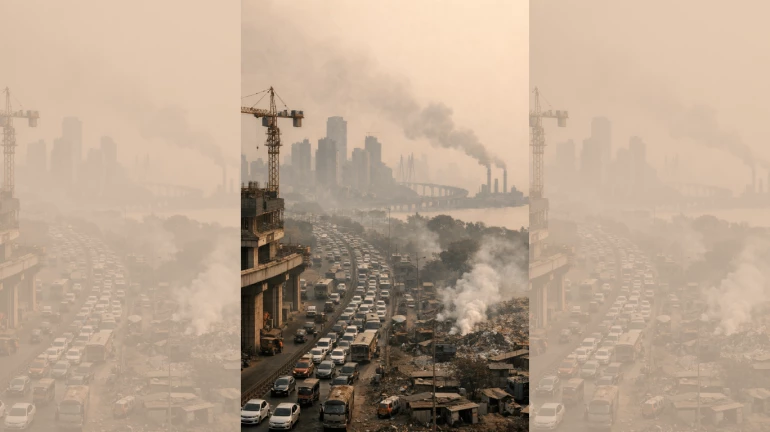


With the onset of winter, air quality in the city has shown a steady decline, raising concerns among health experts. Data from the past eight days indicates that the city’s average Air Quality Index (AQI) has reached 125, a level considered unsafe for sensitive groups. Doctors warn that prolonged exposure to polluted air can begin to affect even otherwise healthy individuals.
As on Friday early morning, December 26, the city’s overall Air Quality Index (AQI) stood at a worrying 277, placing it firmly in the ‘unhealthy’ category. Meanwhile, in the afternoon, it reached nearly 165, which is also observed as unhealthy, according to data from air quality monitoring platform AQI.in.
An AQI level falling in the moderate or poor category is known to pose risks to children, senior citizens, and people suffering from asthma or other respiratory illnesses. Such levels pose serious health risks even to otherwise healthy individuals.
Area-wise list of AQI:
The Wadala Truck Terminal emerged as the worst-affected zone, recording a staggering AQI of 384, categorised as ‘severe’.
Chembur (332) and Worli (328) also reported severe air quality, while Bandra East and Deonar registered AQI readings of 324 and 321, respectively in the severe range.
Suburban regions fared slightly better, though air quality remained far from acceptable. Kandivali East and Borivali East recorded AQI levels of 143 and 157, while Borivali West stood at 167. Malad West (180) and Mulund West (183) were also placed in the ‘poor’ category, indicating widespread pollution across the metropolitan region.
Experts' Advice:
According to medical professionals, the rise in pollution is linked to multiple factors such as increased vehicular emissions, dust from ongoing construction activities, waste burning, industrial pollution, and seasonal weather changes. During winter, lower temperatures cause the air to remain stagnant, preventing pollutants from dispersing. This leads to smoggy conditions, particularly during early mornings and late evenings.
Dr. Sanggita Checker, Pulmonologist at Wockhardt Hospitals, Mira Road, said, “During winter, air pollution tends to worsen because pollutants remain trapped close to the ground. We see a clear rise in cases of breathlessness, persistent cough, wheezing, and worsening asthma during this season. Elderly individuals, children, and patients with existing lung or heart conditions are particularly vulnerable. Prolonged exposure to polluted air can also weaken lung function over time, even in otherwise healthy individuals. Avoiding early morning outdoor activity, wearing a mask, and seeking medical advice at the first sign of respiratory discomfort can help reduce health risks.”
Commenting on the situation, Dr. Parthiv Shah, Consultant Chest Physician at Apex Group of Hospitals, Mumbai said, “An AQI above 100 should be taken seriously. We are witnessing an increase in respiratory complaints, especially among elderly patients, children, and those with chronic lung diseases. It is advisable for high-risk individuals to avoid unnecessary outdoor exposure. Wearing a mask and taking basic precautions can significantly reduce health risks during days of poor air quality."
The health impact of rising pollution levels is already being observed. Many residents are reporting breathing discomfort, irritation in the eyes and throat, persistent cough, fatigue, and headaches. For individuals with pre-existing lung conditions such as asthma or bronchitis, symptoms tend to worsen during this period.
Mumbai doctors advise citizens to stay alert to air quality updates, limit outdoor activities during peak pollution hours, stay hydrated, and seek medical attention if respiratory symptoms persist. The hospital group continues to emphasize the importance of preventive care and public awareness to safeguard community health during the winter months.
Mumbai’s air quality often worsens due to a mix of human activity and weather conditions. Large infrastructure projects such as metro construction and real estate development generate significant amounts of dust, which remains suspended in the air and increases pollution levels. Heavy traffic and frequent congestion across the city release a high volume of exhaust emissions, adding fine combustion particles that are harmful when inhaled. Authorities have also urged citizens to cooperate by avoiding waste burning and reducing the use of private vehicles wherever possible, as collective action can help curb pollution levels.


 Share
Share Tweet
Tweet