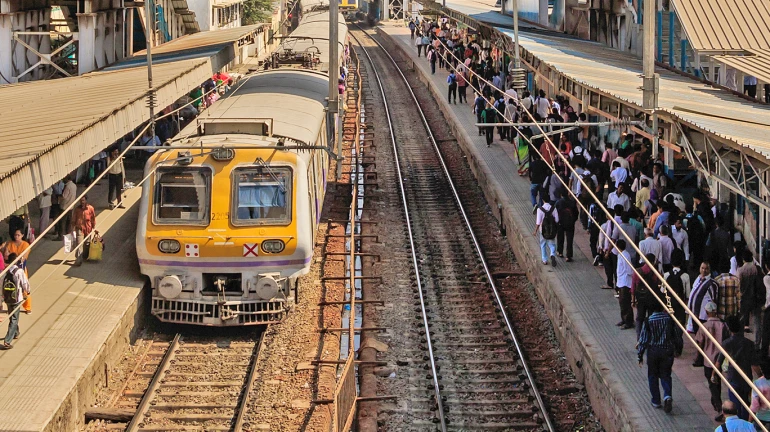


Three railway stations in the Mumbai region — Andheri, Dadar and Kalyan — have been identified among 15 stations across the country for redevelopment under the Public-Private Partnership (PPP) model. Railway Minister Ashwini Vaishnaw, in a written reply in the Rajya Sabha, said several models had been explored for station redevelopment and modernisation, including PPP. The identified stations are at different stages of master planning and financial modelling.
No specific timeline has been announced for the redevelopment of Andheri, Dadar or Kalyan. Their projects are currently being taken through the planning and financial assessment process. The PPP model has already been used for the redevelopment of Rani Kamalapati railway station in Madhya Pradesh, which has been cited by the Railway Ministry as an example of PPP-based station redevelopment.
Among the 15 stations identified under the programme, the redevelopment proposal for Vijayawada railway station has been approved by the Public Private Partnership Appraisal Committee (PPPAC). A tender was invited for the project, but no offer was received. The tender was subsequently re-invited, the minister said. The other stations, including the three in Mumbai, are at various stages of planning and financial modelling.
The Railways is also carrying out station redevelopment under the Amrit Bharat Station Scheme (ABSS). A total of 1,340 stations have been identified under the scheme, with redevelopment being undertaken in phases. Master plans are being prepared and passenger facilities and station infrastructure are being upgraded as part of the programme.
According to the Railway Ministry, 261 stations have been redeveloped under the Amrit Bharat Station Scheme so far. In the Mumbai region, Byculla, Matunga, Parel, Shahad and Thane appear in the list of completed stations. These are separate from Andheri, Dadar and Kalyan, which have been identified for redevelopment under the PPP model.
In 2026, Mumbai’s rail network has also seen additions to passenger services. AC local services were introduced on the Harbour Line from January, while new long-distance services have been added from Mumbai, including the Bengaluru–Mumbai Express, which began its inaugural run in May, and two weekly Mumbai–Nanded Express services launched in July. Infrastructure capacity has been expanded alongside these services. Platform extension work has been completed at 34 Mumbai stations to accommodate 15-coach EMUs, while works at Dadar, Jogeshwari, Mumbai Central, Bandra Terminus, Vasai Road and Kalyan are aimed at increasing train-handling capacity. Mumbai’s suburban network currently handles nearly 3,200 services a day, making capacity augmentation a key part of ongoing railway works. At Virar, platforms have been widened and extended to accommodate 15-coach locals under the Virar-Dahanu Road quadrupling project.
Meanwhile, the Mumbai-Ahmedabad High-Speed Rail project is also adding a new layer to the city’s rail infrastructure. The Mumbai section includes stations at BKC, Thane and Virar, with foundation work progressing at the latter two and the underground BKC station nearing completion of its foundation stage. The 508-km corridor is being built with 12 stations, and the entire corridor has been targeted for completion by the end of 2029.


 Share
Share Tweet
Tweet