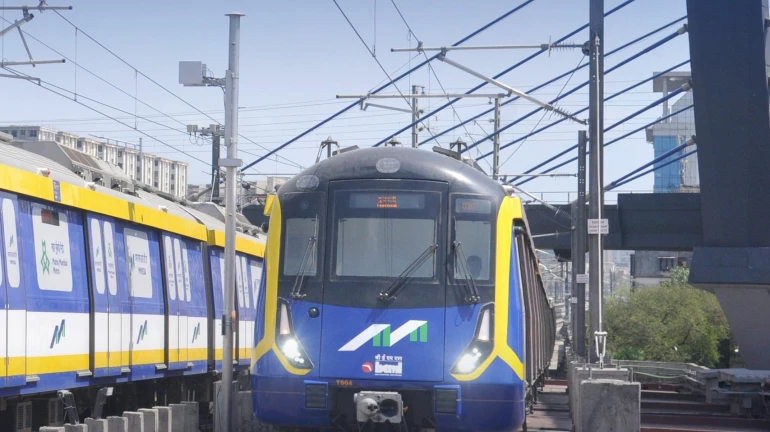


The Mumbai Metropolitan Region Development Authority (MMRDA) has approved the construction of a direct foot overbridge (FOB) connecting a Metro Line 4 station with the Godrej commercial campus in Vikhroli. The approval is aimed at improving last-mile connectivity across Mumbai's expanding Metro network. The proposal is only the second private development in Mumbai to receive a No Objection Certificate (NOC) from MMRDA for direct access to a Metro station. Earlier, a similar approval was granted for Oberoi Mall on Metro Line 7. The proposed foot overbridge will allow employees, visitors and commuters to directly access the Godrej campus from the Metro station without crossing the busy LBS Road. According to officials, the connection is expected to improve pedestrian safety, reduce travel time and encourage Metro usage.
Under MMRDA's policy, commercial and residential developments seeking direct Metro connectivity are required to pay a one-time, non-refundable development fee. The applicant must also bear the complete cost of designing and constructing the FOB and pay an additional six per cent of the construction cost towards MMRDA's supervision charges. Every proposal is subjected to detailed technical, structural and safety scrutiny before approval.
Godrej & Boyce has paid a one-time, non-refundable development fee of ₹10 crore to MMRDA and will bear the entire cost of constructing the foot overbridge. The cheque was handed over by Anup Mathew, Executive Vice President and Business Head, Godrej Enterprises Estates Division, Godrej Enterprises Group, to MMRDA Metropolitan Commissioner Dr Sanjay Mukherjee and other officials. According to MMRDA, the model has already been implemented through the direct Metro access provided to Oberoi Mall, allowing commuters to enter the commercial complex directly from the station without stepping onto the main road.
The authority is also examining similar proposals, including one from Bharat Diamond Bourse on Metro Line 2B. If approved, the project is expected to benefit nearly 40,000 daily users while reducing pedestrian movement on surrounding roads and encouraging Metro usage.
Chief Minister Devendra Fadnavis said the policy has been introduced to provide direct Metro access to major commercial and residential developments and strengthen last-mile connectivity. He said the initiative encourages Metro ridership, increases fare revenue and generates additional non-fare revenue through the one-time development fee, supporting the financial sustainability of the Metro network. Deputy Chief Minister and MMRDA Chairman Eknath Shinde said the authority has been receiving encouraging responses from commercial establishments and residential developments seeking direct Metro connectivity. He said every proposal undergoes rigorous technical and safety scrutiny before approval and added that the initiative improves last-mile connectivity, reduces congestion around Metro stations, strengthens commuter convenience and generates sustainable non-fare revenue.
MMRDA Metropolitan Commissioner Dr Sanjay Mukherjee said the initiative aims to integrate Metro stations with major commercial and residential destinations while ensuring the cost of connectivity is borne by beneficiary institutions. According to MMRDA, the policy forms part of a broader strategy to improve commuter experience, reduce dependence on road-based access and generate additional non-fare revenue for the Metro network.


 Share
Share Tweet
Tweet