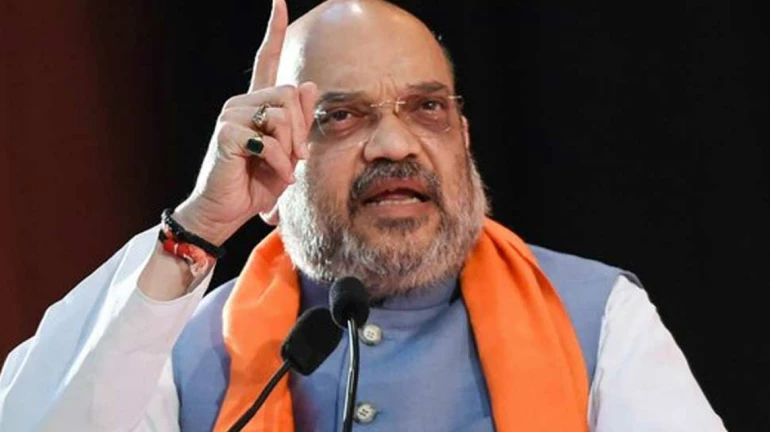


A target to implement the Uniform Civil Code (UCC) across all 21 states governed by the BJP-led National Democratic Alliance before the 2029 Lok Sabha elections has been announced by Union Home Minister Amit Shah. At the same time, consultations with alliance partners over a possible nationwide National Register of Citizens (NRC) exercise are being conducted, with the issue being positioned as part of the government’s broader approach towards citizenship and national security. The announcement was made during the ‘Seva Sankalp Abhiyan’, a month-long nationwide outreach campaign being organised by the BJP and its state governments. The campaign has been planned to commemorate Narendra Modi’s 25 years in government, covering his tenure as Gujarat chief minister and later as Prime Minister.
Significant progress towards implementing the UCC has already been made in several BJP-governed states. Uttarakhand became the first state to enact UCC legislation in February 2024, and the law was subsequently implemented in January 2025. Similar legislation has been passed in Gujarat, Assam and Madhya Pradesh, although presidential assent and notification are awaited. Committees have also been constituted in Maharashtra, West Bengal and Chhattisgarh for preparing proposed UCC legislation.
The UCC has traditionally been regarded as one of the BJP’s major ideological objectives, together with the construction of the Ram Temple and the abrogation of Article 370 in Jammu and Kashmir. The latter two objectives have already been pursued by the party. Under Article 44 of the Constitution, the state has been urged to endeavour to secure a Uniform Civil Code for citizens. However, areas including marriage, divorce, inheritance and adoption have historically been regulated through religion-specific personal laws.
A possible nationwide expansion of the NRC was also discussed by Shah. Consultations with NDA allies were said to be underway before a final position is adopted. In Manipur, discussions are also being conducted over whether 1951 should be used as the baseline year for an NRC exercise. It was stated by Shah that the final position would be “shared publicly” once consultations had been concluded.
National security achievements were also highlighted during the address. Surgical strikes, air strikes and Operation Sindoor were cited as measures through which a policy of “zero tolerance towards terrorism” had been established. The abrogation of Articles 370 and 35A was also presented as an important achievement, with it being claimed that the constitutional changes had been carried out without “a single drop of blood” being shed or a bullet being fired. Kashmir was described by Shah as being “now fully integrated with India”. Progress against Naxalism and insurgency in the North-East was also emphasised. More than 9,000 surrenders were cited by Shah, while over 14 peace agreements were said to have been signed in the North-East. These measures were credited by him with helping move the region towards greater stability and development.
Earlier in Mumbai, an exhibition showcasing the heritage collection of the Asiatic Society of Mumbai was inaugurated by Shah. During the visit, the government’s approach towards the “decolonisation” of Indian history and knowledge systems was also explained. Claims that history was being erased through the decolonisation process were rejected. Instead, it was argued that history should be made “complete and authentic” and presented again from an Indian perspective. According to Shah, historical narratives, knowledge systems, traditions and culture had been used by colonial rulers to strengthen their control, and efforts were now being made to free those systems from the colonial legacy.


 Share
Share Tweet
Tweet