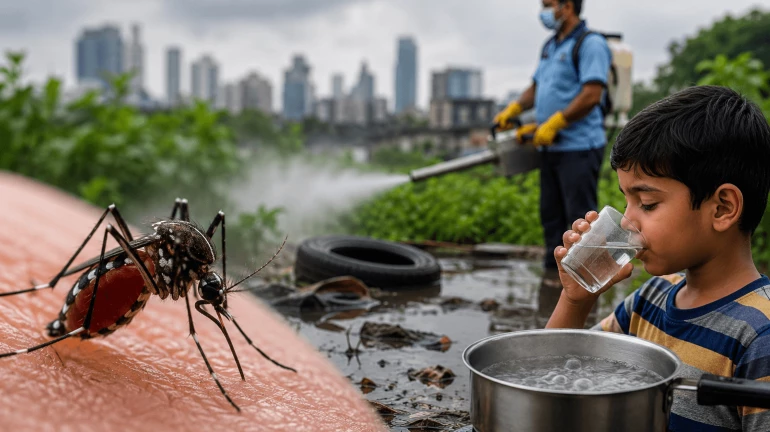


Monsoon-related diseases continue to remain a concern in Mumbai, with malaria cases recording a year-on-year increase despite a decline in dengue and leptospirosis cases.
The Brihanmumbai Municipal Corporation (BMC) has intensified surveillance, mosquito-control measures and public health campaigns to contain the spread of monsoon-related illnesses.
| Disease | Cases This Year | Cases Last Year | Trend |
|---|---|---|---|
| Malaria | 3,177 | 2,852 | 🔴 Increase |
| Dengue | 1,079 | 1,217 | 🟢 Decrease |
| Leptospirosis | 189 | 322 | 🟢 Decrease |
Malaria remains the biggest concern among the three major vector-borne diseases. The number of cases has increased by about 11.39% compared with the corresponding period last year. The BMC has urged residents to remain vigilant, particularly in areas where mosquito breeding has been detected.
Malaria cases have increased significantly during the monsoon. BMC data shows that 655 cases were recorded in June and 1,380 in July. During the first half of August, the city reported another 1,142 cases.
Another set of figures released by the civic body puts the number of malaria cases in the first 15 days of August at 1,797, compared with 1,380 cases recorded throughout July, highlighting the continuing upward trend.
Areas Reporting Higher Malaria Cases
Several civic wards have emerged as hotspots for malaria cases:
| BMC Ward | Key Areas |
| E Ward | Byculla, Madanpura, Mazgaon |
| K-West Ward | Andheri, Nehru Nagar, Amboli |
| G-South Ward | BDD Chawl, Sasmira |
| F-South Ward | Parel, Bhoiwada, Sewri |
| H-West Ward | Hill Road, Turner Road, Perry Cross Road |
Dengue cases have fallen compared with last year's figures. Mumbai recorded 1,079 cases between June and August 15, down from 1,217 cases during the same period in the previous year.
| Disease | June | July | August 1-15 |
| Dengue | 266 | 466 | 339 |
| Leptospirosis | 33 | 78 | 68 |
Leptospirosis cases have also declined year-on-year, falling from 322 cases last year to 189 this year. However, the BMC has warned residents that the risk remains, particularly because people can contract the infection through contact with water or soil contaminated by infected animal urine during the monsoon.
Controlling mosquito breeding remains one of the biggest challenges for Mumbai's civic authorities. The malaria control team also inspected 17,793 potential breeding sites, including wells, water tanks and swimming pools.
| Mosquito Control Activity | Number |
| Potential dengue breeding sites inspected | 4,74,341 |
| Sites with Aedes breeding | 11,227 |
| Potential malaria breeding sites inspected | 17,793 |
| Sites with Anopheles breeding | 3,319 |
| Discarded tyres removed | 674 |
| Scrap items removed | 25,860 |
| Buildings covered by fogging | 18,568 |
| Hutments covered by fogging | 3,18,803 |
Construction sites are among the locations being closely monitored because stagnant water can provide ideal breeding conditions for mosquitoes.
As part of its intensified monsoon disease surveillance campaign, the BMC surveyed over 5 lakhs households between August 1 and August 15.
| Surveillance Activity | Number |
| Households surveyed | 5,63,382 |
| Citizens screened | 26,85,828 |
| Blood samples collected | 32,158 |
The campaign is aimed at identifying suspected cases at an early stage and ensuring timely testing and treatment.
Apart from mosquito-borne diseases, Mumbai has also reported a sharp increase in H1N1 cases. The H1N1 count represents an increase of nearly 329% compared with the corresponding period last year, according to the reported BMC figures.
| Disease | June | July | August 1–15 |
| H1N1 | 58 | 105 | 146 |
| Gastroenteritis | — | 105 | 298* |
| COVID-19 | — | — | 39* |
To reduce mosquito breeding at construction sites, the BMC has launched its ‘Aarogya Sathi’ initiative. The programme has already been implemented at 4,075 construction sites, with workers being trained to identify and prevent mosquito breeding.
The civic body aims to train between 20,000 and 30,000 workers under the initiative. The programme also focuses on educating workers about symptoms of monsoon-related illnesses and encouraging them to seek medical care promptly when symptoms develop.
Although dengue and leptospirosis cases are lower than last year, the rise in malaria and H1N1 cases highlights the continuing health risks posed by the monsoon. Residents are advised to prevent stagnant water from accumulating around homes and workplaces, maintain clean surroundings and avoid contact with potentially contaminated floodwater.
The BMC's ongoing surveillance, fogging and breeding-site elimination efforts are aimed at containing the spread of monsoon diseases. However, continued public cooperation will remain crucial as Mumbai moves through the monsoon season.


 Share
Share Tweet
Tweet