



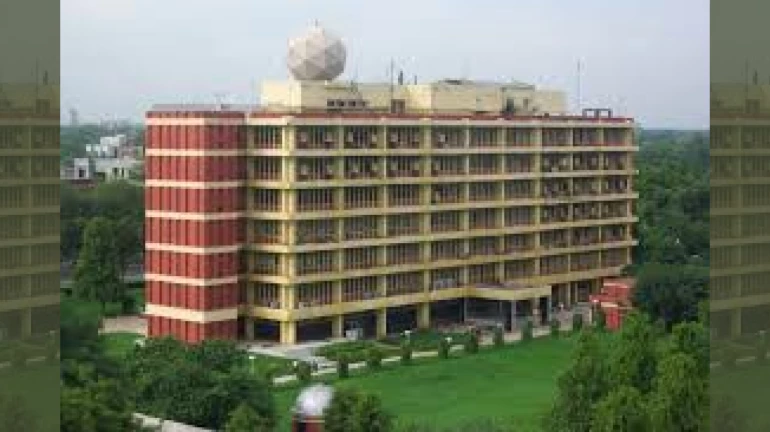


Navi Mumbai is set to get its first observatory of the India Meteorological Department (IMD), which will be located within the premises of the Navi Mumbai International Airport (NMIA). The facility aims to strengthen weather observation and forecasting services for Navi Mumbai and the wider Raigad district.
The observatory is being developed as an ancillary unit to the IMD’s newly commissioned aerodrome meteorological station (AMS), which became operational on December 25, coinciding with the commencement of commercial operations at the airport. The AMS primarily supports aviation by monitoring runway-related weather equipment and issuing Meteorological Aerodrome Reports (METARs), which are critical for safe aircraft take-offs and landings.
Located inside the airport premises, the AMS enables IMD officials to continuously track parameters such as runway visibility, temperature, atmospheric pressure, wind speed and wind direction. These observations are compiled into METARs, allowing pilots to make informed operational decisions.
In contrast, the upcoming IMD observatory will focus on broader regional weather monitoring. It will be equipped with conventional instruments, including wind profilers and automatic weather stations, to generate accurate local weather data and forecasts for the entire Raigad district.
Currently, Mumbai has only two IMD observatories—at Colaba and Santacruz—while the nearest observatory outside the city is located at Alibaug in Ratnagiri district. The absence of a dedicated IMD observatory in the Navi Mumbai region has long been a point of criticism.
Following public backlash over the IMD’s failure to issue timely heatwave warnings after 14 people reportedly died of heatstroke during a rally, an automatic weather station was installed in Kharghar. However, the region continued to lack a full-fledged observatory.
To address this gap, the IMD has now initiated the construction of the new observatory at NMIA. According to officials at the IMD aerodrome station, the facility will significantly improve forecasting capabilities for Navi Mumbai and Raigad, while also complementing aviation-related meteorological services.








 Share
Share Tweet
Tweet