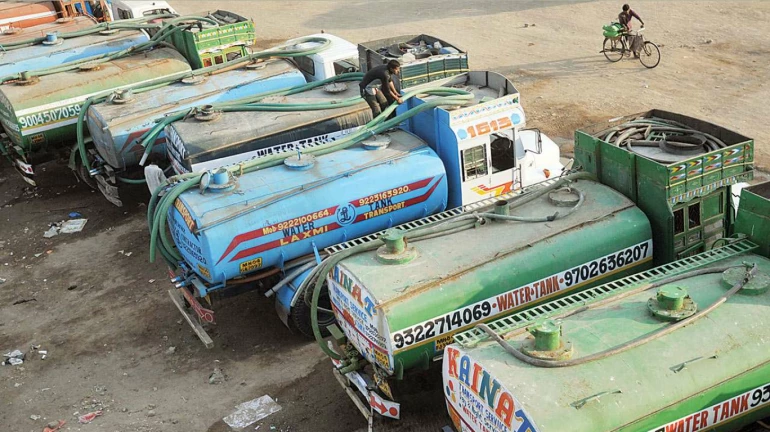


Mumbai’s water security was placed under renewed pressure after a suspension of private water tanker services was announced by operators across the city. The decision was taken at a time when a 10% reduction in municipal water supply was already being experienced and reservoir levels were being closely monitored ahead of a monsoon season that was expected to be weaker than usual.
A substantial portion of the city’s daily water requirement has traditionally been supported by private tanker operators. It was estimated that nearly 8% of Mumbai’s water demand was being fulfilled through tanker supplies, particularly in residential societies, commercial establishments, and hospitality businesses where municipal supply was considered insufficient. As a result, the suspension was viewed as a development with potentially far-reaching consequences.
The action was said to have been triggered by regulations enforced under the Central Ground Water Authority framework. Under these rules, groundwater extraction through wells and borewells used by tanker operators was required to comply with a series of conditions. A No-Objection Certificate was mandated, ownership of at least 200 square metres of land containing the water source was required to be demonstrated, and documentation relating to tanker ownership and water quality was expected to be submitted. In addition, tamper-proof digital flow meters equipped with telemetry systems were required to be installed, while compliance with Bureau of Indian Standards drinking water norms was also mandated.
These requirements were described by tanker operators as impractical and economically challenging. It was argued by industry representatives that the regulations had not adequately accounted for Mumbai’s unique land constraints and operating realities. Consequently, operations were said to have been rendered financially unsustainable for many suppliers.
Concerns were simultaneously raised by residents and housing societies that depend heavily on tanker deliveries. In several parts of the city, municipal water supply was reported to be irregular, making tanker services an essential backup source. Fears were expressed that prolonged disruption could worsen shortages and inconvenience thousands of households.
The hospitality industry was also expected to be affected. Hotels, restaurants, and other commercial establishments were reported to be reliant on tanker water due to inadequate pressure from existing supply networks. Industry observers warned that operational challenges could be intensified if the suspension continued for an extended period. The possibility of unauthorised or black-market water distribution was also highlighted as a potential consequence of restricted supply.
With negotiations yet to be concluded, a period of uncertainty was being faced by residents, businesses, and authorities alike. An early resolution was being sought as the city prepared for increasing water demand and mounting concerns over future availability.


 Share
Share Tweet
Tweet