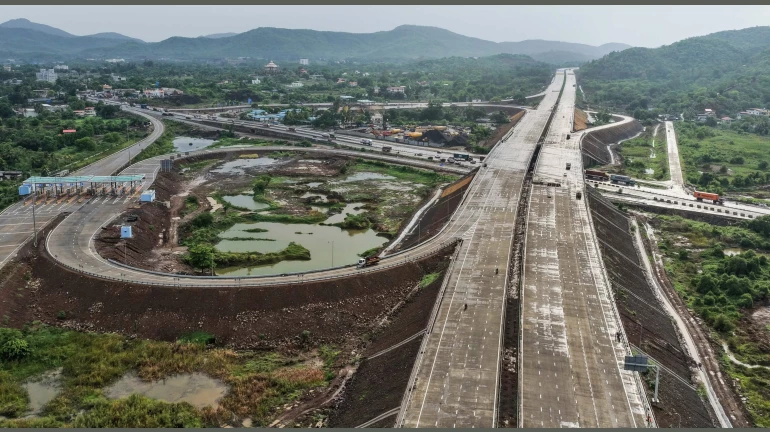


The long-awaited Mumbai-Vadodara section of the Delhi-Mumbai Expressway is expected to become operational by August 31, 2026, marking a major milestone in one of India's largest highway infrastructure projects.
Once opened, the expressway will cut travel time between Mumbai and Vadodara from nearly eight hours to around four hours, offering faster, safer, and more efficient connectivity for commuters and businesses alike.
Maharashtra Chief Minister Devendra Fadnavis announced that the entire 157-km Maharashtra stretch of the Vadodara-Mumbai corridor is planned to be opened to traffic by August 31, 2026.
मुख्यमंत्री देवेंद्र फडणवीस यांनी आज विरार, पालघर येथे मुंबई-दिल्ली द्रुतगती मार्गावरील मुंबई-वडोदरा इंटर जंक्शनची पाहणी केली. यावेळी मुख्यमंत्री फडणवीस यांनी उत्तन–विरार सागरी सेतू प्रकल्पाबाबतही सविस्तर चर्चा केली.
— CMO Maharashtra (@CMOMaharashtra) June 28, 2026
या उत्तन–विरार सागरी सेतूची वैशिष्ट्ये :
✅ सुमारे… pic.twitter.com/4og0L8jig3
The corridor has been divided into seven construction packages, with five already completed and ready for use. Work on the remaining two packages is progressing rapidly and is expected to be finished before the targeted opening date.
The Maharashtra section is being developed at an estimated cost of ₹24,000 crore.
The Mumbai-Vadodara corridor forms a crucial section of the 1,400-km Delhi-Mumbai Expressway, an eight-lane, access-controlled greenfield highway being developed by the Central government at an estimated investment of ₹1 lakh crore.
The expressway will connect five states—Haryana, Rajasthan, Madhya Pradesh, Gujarat, and Maharashtra—creating a high-speed road network between the national capital and India's financial hub.
One of the biggest benefits of the expressway will be a significant reduction in travel time. Once operational, motorists will be able to travel between Mumbai and Vadodara in approximately four hours instead of the current journey of around eight hours.
The new route is also expected to provide a smoother and safer driving experience by reducing congestion on existing highways.
– February 12, 2023: Prime Minister Narendra Modi inaugurated the 246-km Delhi–Dausa–Lalsot stretch in Rajasthan, developed at a cost of more than ₹12,000 crore.
– February 22, 2024: The 87-km Vadodara–Bharuch section in Gujarat was opened for traffic.
– June 5, 2026: Two more stretches in Gujarat—the 36-km Kim–Ena section and the 27.5-km Gandeva–Ena section– were inaugurated.
According to Chief Minister Fadnavis, the expressway's direct connectivity to the Jawaharlal Nehru Port Authority (JNPA) will transform cargo transportation between northern and western India.
Freight vehicles heading to the country's largest container port will benefit from faster transit times while avoiding traffic bottlenecks on the Thane, Bhiwandi, and Ghodbunder routes. This is expected to reduce fuel consumption, lower transportation costs, and improve the overall efficiency of India's logistics network.
The improved road connectivity is expected to strengthen links between major industrial hubs in North and West India and Mumbai's port infrastructure. Faster movement of goods is likely to boost exports, attract fresh investments, support industrial growth, and generate new employment opportunities.
The project is also expected to enhance regional connectivity while contributing to India's long-term infrastructure and economic development.
During a recent site inspection, Chief Minister Devendra Fadnavis reviewed the progress of the ongoing work and directed officials to ensure timely completion without compromising on construction quality. He emphasized the importance of delivering the project within the scheduled timeline so that the public and industries can begin benefiting from the expressway at the earliest.
With the Mumbai-Vadodara section expected to open by the end of August 2026, the Delhi-Mumbai Expressway is moving closer to becoming a game-changing transportation corridor. By dramatically reducing travel time, improving freight movement, and strengthening connectivity between key industrial regions and JNPA, the project is set to play a vital role in boosting India's infrastructure, trade, and economic growth.


 Share
Share Tweet
Tweet