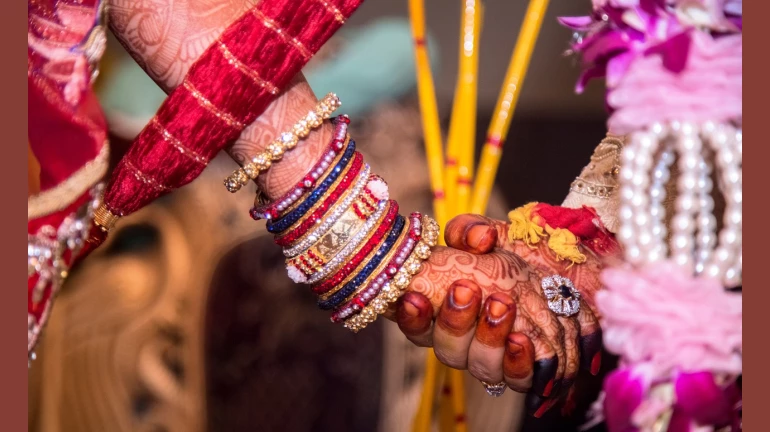


The Maharashtra government is considering making mention of birth dates of both the bride and groom on wedding invitation cards. The goal is to prevent child marriages in the state. Women and Child Welfare Minister Aditi Tatkare informed the Assembly on Wednesday that the proposal has received support from the State Child Rights Commission and is under review by the government.
As per sources, the government has also contacted Rajasthan, where a similar measure has already been implemented, to gather information about its experience. The state will also consider amendments to existing laws if required for implementing the proposal.
The minister said Maharashtra has bettered the implementation of the Prohibition of Child Marriage Act, 2006. District-level action committees and local child protection committees have been given powers to stop child marriages and initiate legal action when necessary.
As per reports, district administrations, municipal bodies and Anganwadi workers are actively involved in identifying and preventing child marriages. Their efforts have contributed to a rise in preventive action across the state.
According to official figures, Maharashtra wants to reduce its child marriage rate to below 10 per cent within the next five years. The latest assessment showed the state's child marriage rate at 19.6 per cent. The national average stands at 20.1 per cent.
Government data also showed an increase in the number of child marriages stopped by authorities. In 2018-19, officials prevented 147 child marriages. The number rose to 1,495 in 2024-25. So far this year, authorities have stopped 1,434 child marriages and registered 136 FIRs in connection with such cases.
The government is examining plans to provide special care and housing facilities for children from migrant families. The measure is being considered to reduce the chances of child marriages in these areas.
The issue gained attention during the ongoing Assembly session after the government presented data showing high levels of child marriage in several districts despite strict legal restrictions. According to government statistics, Parbhani recorded the highest prevalence rate. Data showed that 48 per cent of minor girls were married. Beed followed with 43.7 per cent. Dhule reported a rate of 40.5 per cent, while Solapur recorded 40.3 per cent.


 Share
Share Tweet
Tweet