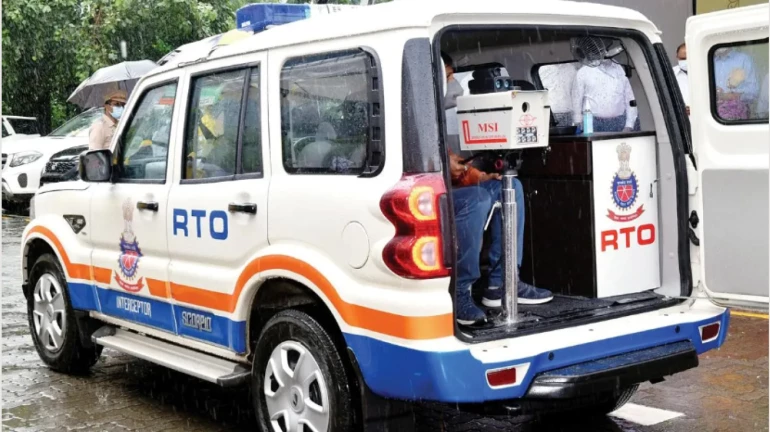


As many as 3,233 motorists have been penalised for traffic violations between December 11 and 22 in an enforcement drive conducted by Regional Transport Offices (RTOs) using newly procured interceptor vehicles across Mumbai and Mumbai Metropolitan Region (MMR).
It is pertinent to note that Mumbai and MMR have witnessed a boost in traffic enforcement after regional transport authorities deployed newly procured interceptor vehicles across major corridors.
According to road transport officials, 71% of the offenders accounted for two-wheeler riders. The highest number of violations was for driving without a helmet.
Of the total motorists booked, 1,772 were riders not wearing helmets, while 531 were pillion riders without helmets. In addition, 426 motorists were fined for over speeding and 267 car drivers for not wearing seatbelts.
An RTO officer further stated that fines amounting to over ₹33 lakh were collected during the drive. Under the Motor Vehicles Act, penalties are generated automatically once violations are confirmed, limiting discretionary intervention and improving transparency in enforcement. Around 200 motor vehicle inspectors and assistant inspectors were trained to handle the new equipment to operationalise this system.
Officials said that 69 interceptor vehicles were stationed along key corridors, including the Eastern and Western Express Highways, as well as internal city roads.
The interceptor vehicles, fitted with state-of-the-art radar systems, were deployed at accident-prone stretches, highways and major arterial roads. However, earlier this year, the procurement of the interceptors had drawn scrutiny over the cost of radar systems.
Features of interceptor vehicles:
- Equipped with automatic number plate recognition (ANPR) cameras, radar-based speed detection systems, lux meters to measure brightness levels, and artificial intelligence-enabled 360-degree cameras.
- These systems allow multiple traffic violations—such as speeding, failure to wear helmets or seatbelts—to be detected and recorded automatically, without manual intervention.
- State-of-art radar system: They are capable of detecting speeding vehicles from a distance of up to 1.5 km, enabling enforcement teams to act against hundreds of violators within an hour.
- Each interceptor vehicle costs around ₹13 lakh.
- The radar equipment alone is priced at ₹35.84 lakh per unit.
- The total cost for procuring 69 interceptor vehicles stood at ₹9.25 crore.


 Share
Share Tweet
Tweet