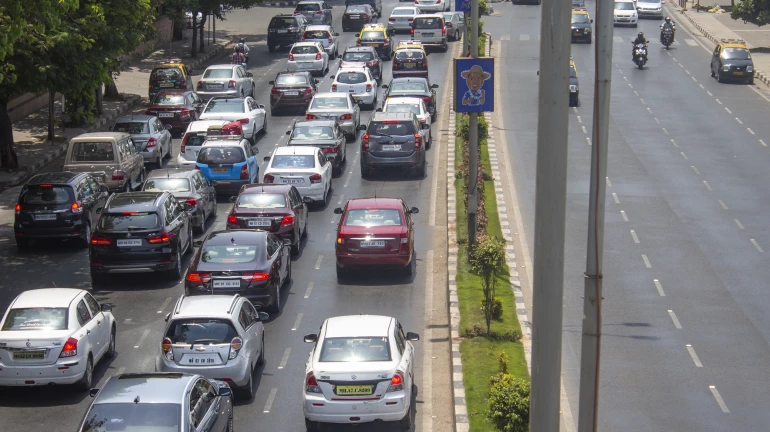


Mumbai’s elected officials have suggested introducing a congestion fee in major business areas to reduce traffic and improve air quality. The proposal has brought congestion pricing back into public discussion as the city continues to face heavy vehicle movement and rising pollution levels.
The issue was raised by BJP corporator Makarand Narwekar from Colaba, who wrote to the Brihanmumbai Municipal Corporation (BMC) commissioner. In his letter, he asked the civic body to design and test a congestion pricing system for private vehicles entering busy parts of south Mumbai. These areas include Fort, Nariman Point, and Colaba. The plan focuses on peak office hours when traffic pressure is the highest.
Under the proposal, private vehicles with only one occupant, the driver, would be charged a congestion fee. The suggested charge ranges between INR 50 and INR 100 per entry. The fee would apply during morning peak hours from 8 am to 11 am and evening peak hours from 5 pm to 8 pm. Vehicles entering the notified zones during these time slots would be automatically charged.
The plan suggests using existing infrastructure for fee collection. FASTag systems, along with CCTV cameras or Automatic Number Plate Recognition technology, would be installed at entry points. These systems would identify vehicles and deduct the fee without stopping traffic.
The pilot would help authorities study how the system works on the ground. It would also allow them to assess public response, technical challenges, and overall feasibility before considering expansion to other parts of the city.
This could ease traffic congestion and lower vehicle emissions. The proposal also highlights the potential financial impact of congestion pricing. Estimates suggest that such a fee could generate between INR 200 crore and INR 300 crore every year. The revenue could be used to fund projects that improve air quality and support environmentally friendly transport options.
The push comes as Mumbai continues to see an increase in vehicle numbers each year. This has added pressure on roads and worsened air pollution. Several air quality monitoring stations have recorded hazardous or at-risk pollution levels over time.
Narwekar also referred to recent recommendations in India’s Economic Survey. The survey supports congestion pricing as a tool to manage urban mobility. This reference indicates a broader policy shift away from car-focused city planning.
Globally, congestion pricing has been used for many years. Cities such as London, Stockholm, Singapore, and New York have implemented similar systems. These schemes limit car use in crowded areas and manage peak-hour traffic.


 Share
Share Tweet
Tweet