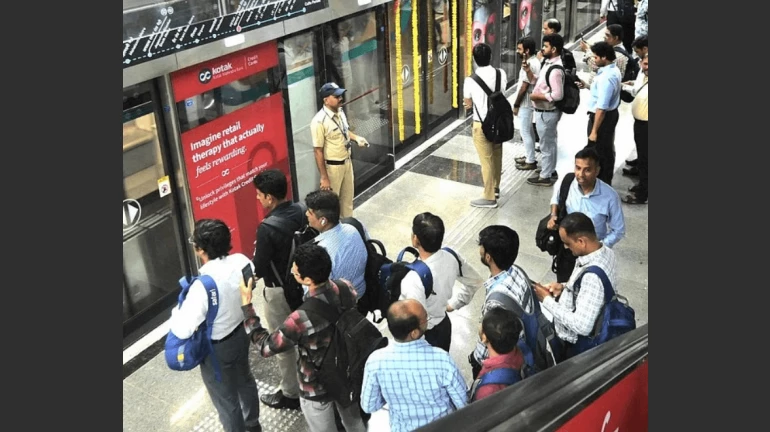


Mumbai’s underground metro, also known as Aqua Line, has witnessed a significant surge in the passenger traffic after the inauguration of the final phase.
The 33.5-km Colaba–Bandra–SEEPZ line has witnessed more than a twofold increase in passenger numbers following the completion of the entire route.
It highlights the growing commuter acceptance of the city’s first fully underground Metro corridor.
As per an official data released, Metro 3 recorded 19.7 lakh passengers in September. In October, after the full corridor opened, ridership jumped to 38.63 lakh.
The upward trend continued in the following months, with 44.58 lakh commuters using the line in November and 46.56 lakh in December.
It is pertinent to note that the impact of the full SEEPZ–BKC–Colaba connectivity is evident in average weekday ridership figures as well. Prior to the final phase, Metro 3 was carrying an average of 75,052 passengers on weekdays.
This number rose sharply to 1.23 lakh in October, increased further to 1.32 lakh in November, and touched 1.48 lakh in December. The line also recorded its highest single-day ridership on October 16, when 1.82 lakh passengers travelled on Metro 3.
To cater to the growing demand, services on the Aqua Line were increased from January 5. The number of trips has gone up from 265 to 292, majorly improving train frequency during peak hours.
Top 3 busiest stations on Aqua Line:
1. Marol Naka station: It is connected to Metro Line 1 between Andheri and Ghatkopar and serves as an important interchange for passengers travelling from Dahisar East-Andheri East Metro Line 7 via Line 1. It recorded the highest ridership of 16.45 lakh passengers between October and December.
2. CSMT: This station recorded 10.28 lakh passengers
3. BKC: It saw recorded 7.3 lakh passengers during the period, making it the third busiest.
It is followed by Siddhivinayak Metro station at Prabhadevi and Santacruz Metro station, which recorded nearly 6.66 lakh passengers each.


 Share
Share Tweet
Tweet