

Mumbai recorded its driest May in the last three years, according to reports revealed by the India Meteorological Department (IMD).
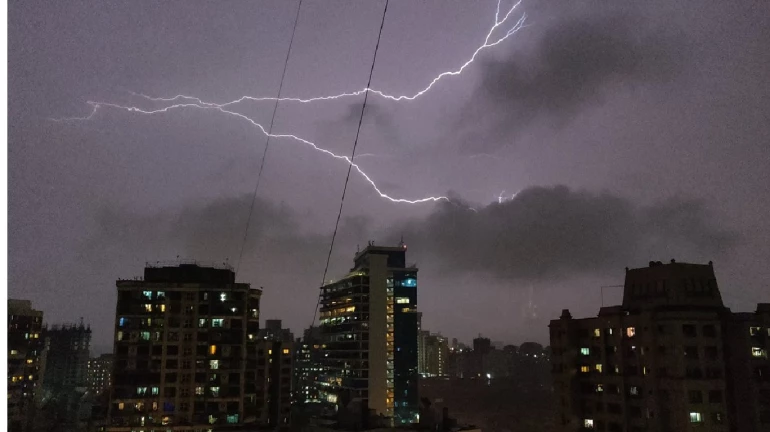
Moderate showers on May 31 brought relief to Mumbai after weeks of dry weather and increased the city’s monthly rainfall total to 8.8 mm.
Despite repeated forecasts of thunderstorms and scattered showers, most parts of the city remained dry throughout May. According to IMD's data, both the Santacruz observatory and the Colaba coastal observatory recorded no measurable rainfall between May 1 and May 30.
Rain finally arrived on May 31, when the Santacruz observatory recorded 8.8 mm of rainfall. This pushed the month’s total rainfall to 8.8 mm. Some eastern suburbs, including Vikhroli, Kanjurmarg, and Mulund, experienced light drizzles on May 22.
However, the amount of rainfall was too small to be measured using standard units. As a result, the observatories recorded “nil” rainfall for that day. The figures show a sharp difference from previous years. The Santacruz observatory recorded 395 mm of rainfall in May 2025. In May 2024, the station received 21.3 mm of rainfall.
The city’s dry conditions were also seen during the earlier months of the year. The Santacruz observatory recorded 0 mm of rainfall during both March and April. This happened despite the city experiencing at least six heatwave alerts starting in March. Santacruz observatory currently has a rainfall shortfall of 9.7 percent for the March-to-May period. The Colaba observatory has recorded a rainfall deficit of 15.5 percent during the same period.
Pre-monsoon showers and thunderstorms are usually common in Mumbai between March and May. These months are typically hot and humid. However, this year, the city remained largely dry during the pre-monsoon season. While Mumbai received very little rainfall, several other parts of Maharashtra experienced heavy showers. By May 31, Pune, Kolhapur, and Satara had each received more than 100 mm of rainfall.
The lack of rainfall also contributed to rising temperatures and heatwave-like conditions in the city. IMD now expects to receive 90 per cent of the long-period average rainfall during the monsoon season.
The revised forecast is lower than the department’s first long-range prediction released last month, which estimated that the country would receive 92 percent of its seasonal rainfall.
The IMD said the change is linked to evolving climate conditions. According to the latest climate model projections, neutral Indian Ocean Dipole conditions are expected to continue during the southwest monsoon season. At the same time, El Niño conditions are likely to develop.
El Niño is a climate phenomenon that causes sea surface temperatures in the central and eastern Pacific Ocean to become warmer than normal. These conditions can weaken southwest monsoon winds and often result in below-average rainfall across India.


 Share
Share Tweet
Tweet