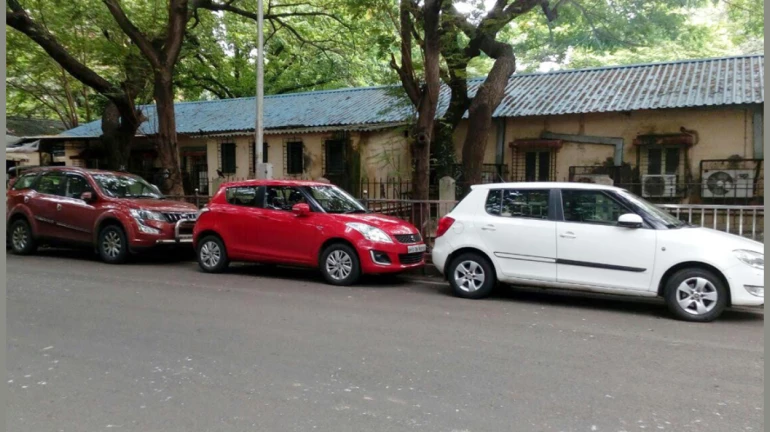


The Mumbai Traffic Police has introduced a temporary odd-even parking arrangement in Powai as part of a three-month pilot initiative aimed at easing chronic congestion in the area.
The directive, issued by Deputy Commissioner of Police (Traffic) Pradeep Chavan, came into force on February 13 and will continue until May 14 under the Sakinaka Traffic Division.
Powai, particularly around Hiranandani Gardens, has long struggled with traffic bottlenecks. The locality’s narrow internal roads, surrounded by residential towers, offices, and commercial establishments, have frequently doubled as informal parking zones, significantly restricting vehicle movement.
The success of this Powai pilot is expected to play a significant role in shaping whether odd-even parking becomes a long-term strategy in Mumbai’s broader congestion management efforts rather than a short-term solution.
Under the new regulation, vehicles are allowed to park on only one side of the road based on the date. On odd-numbered dates, parking is permitted on the right side, while on even-numbered dates, vehicles must be parked on the left. Heavy vehicles are prohibited from parking along the identified stretches altogether.
The system currently covers two key corridors: from Powai Plaza Bus Stop to Olympia Junction, and from D-Mart Circle to the Eden Garden entry gate. These routes connect busy residential and commercial clusters and experience high short-term parking demand throughout the day.
Traffic officials clarified that the initiative is not intended to remove parking entirely but to ensure smoother traffic flow and unobstructed access for emergency vehicles. Instead of penalising every halted vehicle, enforcement efforts will concentrate on wrong-side parking and vehicles that cause prolonged obstruction.
To facilitate the transition, police teams are installing clear signage and stationing wardens to assist drivers unfamiliar with the new rules. While the initial phase will prioritise public awareness, authorities have warned that vehicles blocking carriageways may still face fines or towing.
During the trial period, officials will assess factors such as traffic speed, adherence to the rules, and emergency response efficiency. If the experiment delivers measurable improvements, the odd-even parking framework could be extended to other mixed-use neighbourhoods where complete parking bans have not been effective.


 Share
Share Tweet
Tweet