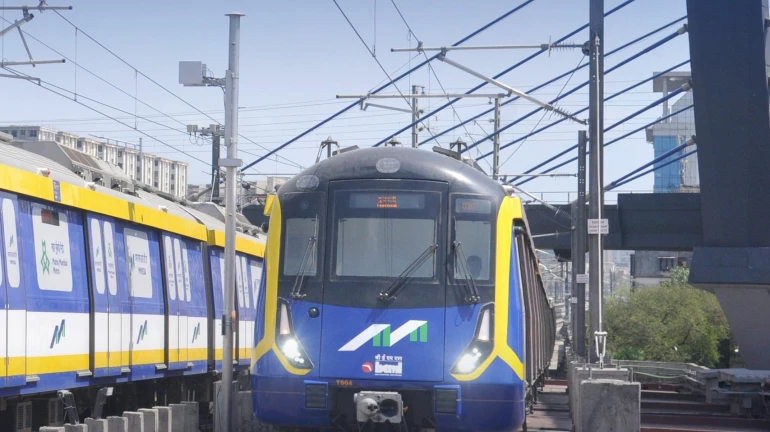


In a major push to strengthen regional connectivity and improve access to the Navi Mumbai International Airport (NMIA), the Maharashtra government has approved CIDCO’s proposal to expand the Navi Mumbai Metro network through the development of Metro Line 1A and Metro Line 2.
The approval was granted by the state Infrastructure Committee chaired by Chief Minister Devendra Fadnavis. The project forms part of the Mass Rapid Transit System (MRTS) proposed under the Comprehensive Transportation Study (CTS)-2021 for the Mumbai Metropolitan Region (MMR).
Following the successful launch of Navi Mumbai Metro Line 1 in November 2023, CIDCO prepared a Detailed Project Report (DPR) for the next phase of expansion and submitted it to the state government for approval.
The proposed Metro Line 1A will be a 3.02-km elevated corridor connecting CBD Belapur to Sagar Sangam through two stations. The line will provide a key interchange with the proposed Gold Line (Metro Line 8), offering seamless connectivity to Navi Mumbai International Airport from western Navi Mumbai.
Metro Line 2, spanning 14.07 km, will connect Pendhar to NMIA Terminal 4 through 11 stations. The corridor is expected to serve the rapidly developing airport influence zone and provide improved access to the MIDC area. It will also connect with the Kalyan-Taloja Metro Line 12 at Amandoot Station near Taloja, extending metro connectivity to eastern parts of the Mumbai Metropolitan Region.
To improve passenger convenience and operational efficiency, the new corridors will be integrated with the existing 11-km Navi Mumbai Metro Line 1. The integration will create a continuous metro network of nearly 28 km stretching from Sagar Sangam to Navi Mumbai International Airport.
CIDCO Vice Chairman and Managing Director Vijay Singhal said the expansion represents a major milestone in the agency’s vision of building a world-class, integrated and sustainable urban transport network for Navi Mumbai. He noted that the project would enhance connectivity between residential, commercial, industrial and airport zones while supporting economic growth and improving commuter convenience.
With Navi Mumbai International Airport expected to witness a growing passenger base, the metro expansion is seen as critical for strengthening regional mobility and providing seamless multimodal connectivity for commuters travelling from Navi Mumbai, Kalyan, Taloja and adjoining areas.
The project is estimated to cost approximately INR 5,575 crore. Construction is expected to begin in the financial year 2027-28, with full-scale operations targeted by 2031-32.
Also Read: Mumbai's First SRA Cluster Redevelopment Project Goes to Reliance


 Share
Share Tweet
Tweet