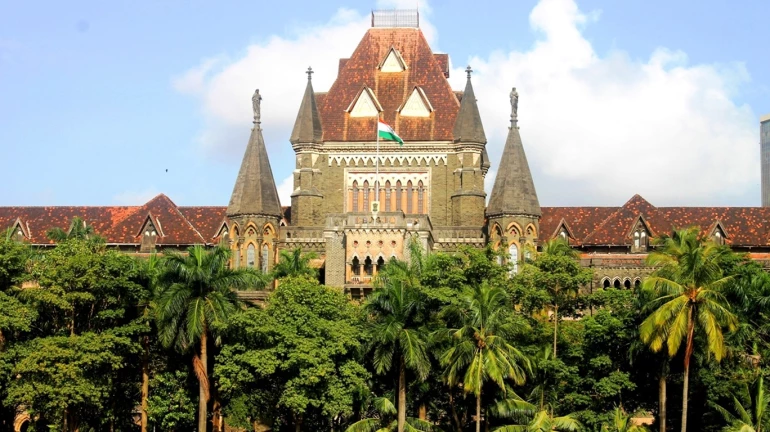


The proposed closure of 757 aided and unaided schools across western Maharashtra has been stayed by the Bombay High Court, after it was observed that the state government had failed to follow the principles of natural justice. The decision was passed by a division bench of Justices Madhav J Jamdar and Pravin S Patil, who restrained the government from taking action against 433 primary schools and 324 secondary schools listed under two Government Resolutions issued in April.
The schools had been marked for action under resolutions issued by the School Education Department on April 1 and April 2. Through these resolutions, 433 primary schools and 324 secondary schools, along with several additional divisions, had been disqualified from receiving grant-in-aid. The action had reportedly been taken on the grounds of poor performance in assessments. The affected institutions had also been directed to seek recognition under the Maharashtra Self-Financed Schools Act, 2012, by April 30. If this direction had not been followed, their recognition could have been withdrawn, which would have effectively led to closure.
The court held that such a decision could not have been taken without giving each institution an opportunity to be heard. It was observed that individual hearings were “absolutely necessary” before any drastic action was taken. The bench stated that closing schools without granting them a fair hearing was in violation of natural justice.
The affected schools had argued before the court that many of them had been functioning for several years and were educating thousands of students. It was also submitted that several institutions had already applied for grant-in-aid, while some had even been found eligible for partial salary and non-salary grants. Despite this, action had been initiated without issuing notices or allowing the schools to present their case.
The High Court also noted that the schools had obtained permissions and recognition from the state government and education authorities under the Secondary School Code. Since the Code lays down a specific process for cancelling recognition, it was held that the government could not bypass this procedure through executive orders. The bench made it clear that a Government Resolution cannot override statutory provisions.
The court also found fault with the direction asking schools to shift to a self-financed model. It was observed that applying for self-financed status is the choice of the school management and cannot be forced by the state government.
Concern was also raised over the impact of the proposed closure on students, teachers, and non-teaching staff. The court noted that no clear assessment had been made on whether other schools could accommodate such a large number of students. It was further observed that employees of unaided schools could face serious hardship, as they cannot be declared surplus and absorbed elsewhere.
With the stay order, the affected schools have been protected from immediate closure, while the government has been restrained from taking coercive action against them.


 Share
Share Tweet
Tweet