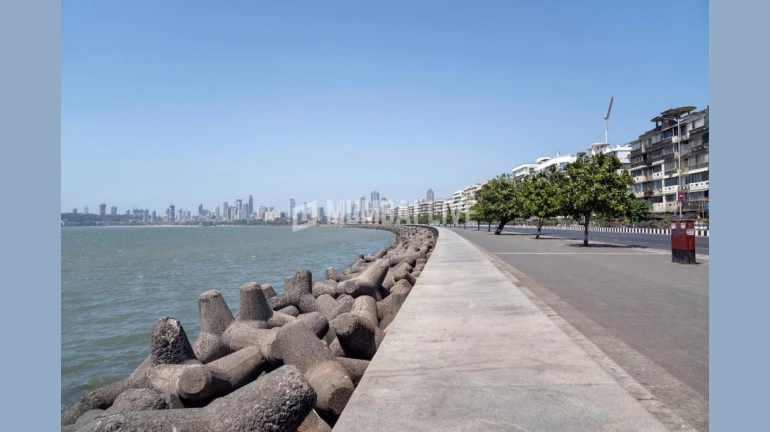


After nearly months of severe air pollution, Mumbai has received a much-needed environmental boost, with the overall Air Quality Index (AQI) dropping sharply to 48 on Wednesday, February 18 at 3 pm, placing it in the ‘good’ category.
This sudden significant shift in AQI coincides with the ongoing Mumbai Climate Week being hosted in the city.
Topping the list were Bandra West Station-1 (AQI 32), Mahavir Nagar (32), Walkeshwar (32), Malad (33) and Santa Cruz West (33). Clearer skies were visible across the city, offering relief to residents who had endured weeks of smog and poor visibility.
Later in the evening, around 6 pm, the AQI was reached moderate category at 94.
The month of February hardly saw any improvement in terms of air quality despite the passage of the winter and rise in the temperatures. Several pockets across the city had recorded AQI levels in the ‘severe’ and even ‘hazardous’ ranges.
In comparison, the first 15 days of January had recorded satisfactory days, and a total of eight such days throughout the month. In December 2025, Mumbai had reported two satisfactory days.
According to the Central Pollution Control Board (CPCB) dashboard, Mumbai recorded AQI of unhealthy category mostly ranging between 105 and 141 between February 1 and 15 which is in the moderate category and is categorised as unhealthy for sensitive groups especially the children and senior citizens.
The city’s recorded AQI level at the satisfactory category only on February 10.
CPCB data shows that in the past fortnight, the city has recorded unhealthy air quality index (AQI) on 14 days – it hovered around the satisfactory category on only one day.
Meanwhile, on Monday, February 16, Mumbai’s overall AQI reading stood at 109, while 16 of the 22 stations displayed moderate level AQI readings – with Mumbai’s Deonar showing the worst AQI at 136, followed by 130 at Ghatkopar, 126 at Bandra Kurla Complex (BKC), and 124 at Andheri East.


 Share
Share Tweet
Tweet