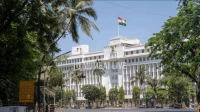
A major cost increase has been approved for the fourth phase of the Goregaon–Mulund Link Road (GMLR) project after clearance was granted by the standing committee of the Brihanmumbai Municipal Corporation during its first meeting since the civic body elections. The proposal, which reflected an escalation of more than ₹800 crore, was reportedly passed without discussion despite objections raised during the session.
The revised financial estimate for the fourth phase has been placed at ₹2,113 crore, significantly higher than the earlier estimate of ₹1,293 crore. Approval for the revised cost was granted during a meeting that was convened after a gap of four years. The decision has been viewed as a key administrative step in maintaining the momentum of one of Mumbai’s most ambitious road infrastructure projects.
The Goregaon–Mulund Link Road is being developed in four phases and has been described as a strategic corridor intended to improve connectivity between the city’s eastern and western suburbs. When completed, the project is expected to dramatically reduce the travel time between Goregaon and Mulund from approximately 90 minutes to about 20 minutes. A defining component of the project involves underground twin tunnels that are being constructed beneath the Sanjay Gandhi National Park and the Aarey Colony.
Budgetary provisions for the earlier phases had already been made in the civic financial plans. An allocation of ₹1,100 crore had been included in the municipal budget for 2025–26, while an additional ₹2,650 crore had been earmarked for the 2026–27 financial year. Officials have indicated that nearly 48 percent of the work on the first three phases has already been completed, with around 18 percent of the tunnelling work having progressed.
Under the approved fourth phase, a 180-metre highway crossing with five lanes in each direction is planned, along with a 24.4-metre viaduct that will carry three lanes on each side. The phase will also involve the improvement of approximately 1.6 kilometres of existing roadway between Nahur and the Airoli toll plaza.
The project contract had earlier been awarded to a joint venture formed by Akshaya Infraprojects and Hindustan Construction Company Ltd. The joint venture had submitted a bid of ₹1,382 crore for the work. However, concerns had been raised by Congress leader Ashraf Azmi, who alleged that the partnership could be part of a cartel arrangement. These objections were ultimately not considered during the approval process. The escalation in cost has been attributed to the need for multiple regulatory approvals, as the project alignment passes through environmentally sensitive zones that include mangroves, forest land and salt pan areas. According to the latest proposal, the project completion timeline has been revised, and the corridor is now expected to be finished by 2029 rather than the earlier target of 2028.
Meanwhile, another large infrastructure initiative—the Mumbai–Ahmedabad Bullet Train project—has also experienced a significant increase in cost estimates. The overall project cost has reportedly risen from roughly ₹1 lakh crore to about ₹1.9 lakh crore. The first operational segment of the high-speed rail corridor, covering around 50 kilometres between Surat and Bilimora, is currently targeted to become functional by 2027.


 Share
Share Tweet
Tweet