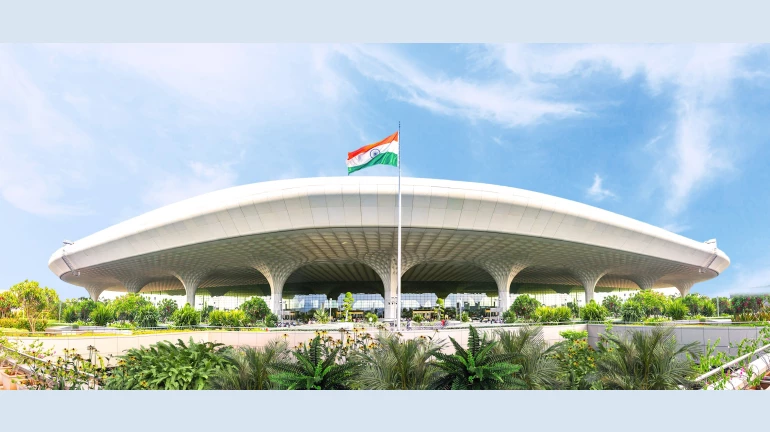


Mumbai’s Chhatrapati Shivaji Maharaj International Airport (CSMIA) is preparing for a major operational change as part of the redevelopment of its nearly 80-year-old Terminal 1 (T1).
The redevelopment will be carried out in phases to minimise disruption to airline operations and passenger movement. As part of the transition, a portion of Mumbai Airport’s air traffic will be redistributed between Terminal 2 (T2) and the newly operational Navi Mumbai International Airport (NMIA).
According to a letter sent by MIAL Chief Airport Officer Vishnu Mohan Jha to Civil Aviation Secretary Samir Kumar Sinha on August 13, the first phase of the redevelopment will focus on the North Section of Terminal 1-B.
The section currently handles around 5 million passengers per annum (mppa). MIAL has decided to restrict the first phase to this portion of T1 so that the impact on flight operations and passengers remains limited.
Demolition is scheduled to start on January 15, 2027, after airlines are given approximately three-and-a-half months to prepare for the operational changes.
Domestic operations at Terminal 1 will also be reduced as part of the transition plan.
From October 25, 2026, at least one-third of the air traffic movements currently handled by T1 are expected to move to Terminal 2.
Airlines currently operating from T1 include IndiGo, SpiceJet, Alliance Air and Star Air, while Air India operates its domestic and international services from T2.
The transition has already begun. Akasa Air moved its domestic operations from T1 to T2 on August 1, 2026, ahead of the larger traffic realignment.
Terminal 1 is nearly eight decades old, making its redevelopment necessary as Mumbai Airport seeks to modernise its infrastructure and meet long-term passenger demand.
Mumbai Airport currently handles more than 950 flight movements a day and has an overall passenger-handling capacity of more than 50 million passengers annually.
T1 has a capacity of approximately 15 million passengers per year, while T2 can handle around 40 million passengers annually.
Parts of Terminal 1 have already been demolished, and the upcoming work represents the next major phase of the airport’s redevelopment programme.
MIAL is not planning to shut down the entire terminal at once. Instead, the redevelopment will be carried out in stages. The first phase will concentrate on the North Section of Terminal 1-B.
By limiting the initial demolition to this area, the airport operator aims to maintain flight operations while construction progresses.
With flights expected to move between Mumbai Airport’s terminals and NMIA, MIAL has proposed the creation of a Joint Transition Group.
The group would coordinate the transition between airlines, airport operators, government authorities and other stakeholders. MIAL has proposed that the group be chaired by the Civil Aviation Secretary.
The airport operator has already begun discussions with airlines regarding the movement of flights from T1 to T2 and from T2 to Navi Mumbai International Airport.
Passengers travelling through Mumbai’s airports from October 2026 onwards should pay close attention to their airline’s terminal information.
As flights are redistributed between Mumbai Airport T1, Mumbai Airport T2 and Navi Mumbai International Airport, terminal assignments may change depending on the airline and route.
Travellers should therefore check their booking confirmation, airline communication and boarding information closer to their journey rather than relying on older terminal details.


 Share
Share Tweet
Tweet