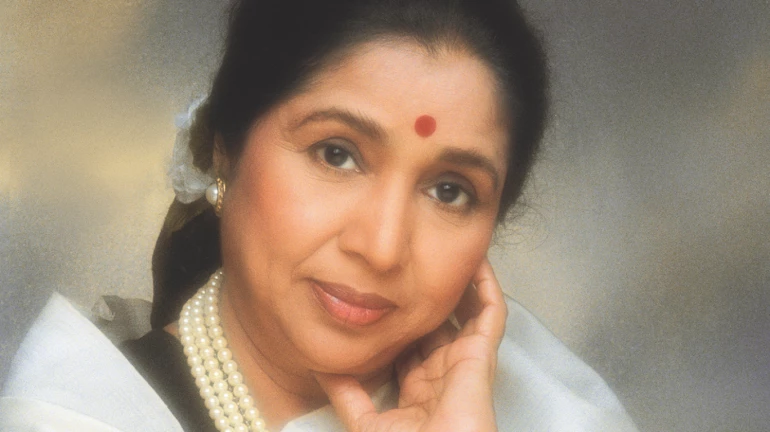


The demise of legendary playback singer Asha Bhosle at the age of 92 has been confirmed, marking the end of an era in Indian music. It has been reported that the veteran singer passed away after battling multiple health complications, following her admission to Breach Candy Hospital in Mumbai on April 11.
It was stated by her granddaughter, Zanai Bhosle, that the singer had been hospitalised due to “extreme exhaustion and chest infection.” Sources indicated that her condition had deteriorated significantly, and she had been placed under intensive care due to cardiac and respiratory concerns. Her critical condition had been closely monitored before her passing was confirmed on Sunday morning by her son, Anand Bhosle.
Arrangements for her final rites have been announced, with her mortal remains to be kept at her residence in Lower Parel for public homage. It has been informed that the last rites will be conducted at Shivaji Park in Mumbai at 4 PM. Attendance by leading personalities from the film industry, as well as representatives from state and central government, is expected.
A career that spanned several decades has been remembered for its remarkable versatility and depth. Asha Bhosle had been known for delivering iconic songs such as Piya Tu Ab To Aaja, Kajra Mohabbat Wala, Rangeela Re, and Dil Cheez Kya Hai. Her musical journey had begun at the age of 10 with a Marathi film, and over the years, she had established herself as one of the most celebrated voices in Indian cinema.
Her association with the renowned Mangeshkar family has also been highlighted. She had been the younger sister of Lata Mangeshkar, and both had been regarded as pillars of Indian playback singing. Despite widespread speculation about rivalry, it had been consistently conveyed by Asha Bhosle that their bond remained strong. In past remarks, it had been shared that attempts to create differences were often dismissed with humour between the sisters.
Born into a musical household led by Pandit Deenanath Mangeshkar, Asha Bhosle’s legacy has been defined by her ability to adapt across genres, from cabaret numbers to classical compositions and ghazals. Her passing has been widely mourned, with generations of listeners remembering her as a voice that shaped the soundscape of Indian music.


 Share
Share Tweet
Tweet