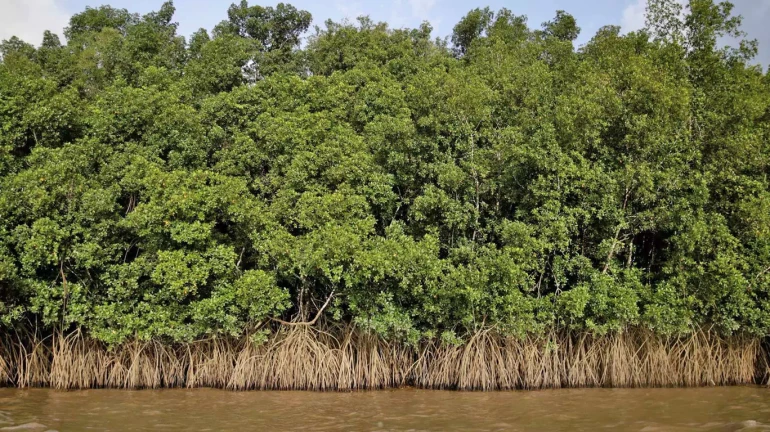


Protection has finally been extended to a portion of Maharashtra’s mangrove ecosystem, nearly a decade after comprehensive safeguards were ordered by the Supreme Court of India. The state mangrove cell has declared 955 hectares of mangrove land as protected, marking limited but significant progress in a long-pending conservation effort.
For several years, more than 9,000 hectares of mangroves had remained outside formal protection due to procedural delays and lack of coordination among government agencies. The issue was brought back into focus when Vanashakti, an environmental organisation, approached the Bombay High Court with a contempt petition, highlighting continued non-compliance with earlier judicial directives. Judicial intervention was strengthened on October 16, 2025, when the High Court ordered collectors of seven coastal districts to transfer mangrove land under their jurisdiction to the state mangrove cell within six months. This order was aimed at addressing administrative bottlenecks that had slowed conservation measures despite repeated warnings.
An affidavit later submitted to the court revealed that 955 hectares had been transferred during the first quarter following the order. While this development was acknowledged as a step forward, it was also stated that districts such as Raigad and Palghar continued to hold a substantial share of mangrove land awaiting transfer. The uneven pace of compliance has raised concerns about the effectiveness of district-level implementation. Once land is notified as protected, it falls under the Indian Forest Act, 1927, the Forest Conservation Act, 1980, and the Environment Protection Act, 1986. These legal provisions collectively prohibit development, construction, or alteration of the land, providing strong statutory backing for conservation.
Environmentalists have warned that mangrove destruction has historically been widespread, with approvals for cutting granted with relative ease. It has been argued that the absence of legal notification weakened enforcement and enabled encroachments, debris dumping, and landfilling for development projects. It has also been pointed out that much of the mangrove land remains under the control of various government agencies, which have yet to formally hand it over to the forest department. This fragmentation of authority was described as a key reason for delayed protection and lack of accountability.
In response to ongoing threats, authorities have informed the court that interim safeguards are being implemented. According to statements made in affidavits, protection is being ensured through deployment of Maharashtra Security Force personnel and forest department staff, along with regular patrolling. In sensitive areas, fencing and boundary walls are being constructed to deter encroachment and illegal dumping. Letters have also been issued to concerned departments to expedite the remaining land transfers.
While progress has been initiated, it has been emphasised that comprehensive protection of Maharashtra’s mangroves will depend on timely compliance, clear ownership, and sustained enforcement. The partial notification has been viewed as a reminder that judicial mandates alone are insufficient without administrative will and coordinated action to preserve fragile coastal ecosystems.


 Share
Share Tweet
Tweet