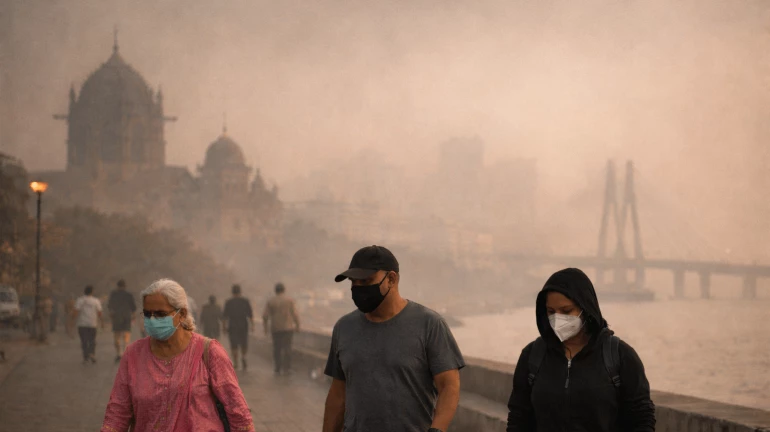


With air quality levels continuing to remain in the poor category across several parts of Mumbai, doctors are advising citizens to rethink common outdoor routines such as morning walks, especially for vulnerable groups.
According to health experts, prolonged exposure to polluted air during early hours can aggravate respiratory and ENT-related conditions and may cause long-term health issues. Mumbai continues to struggle with rising air pollution levels across several areas of the city.
Vehicular emissions, construction dust, and industrial activity remain key contributors to poor air quality.Early morning hours often trap pollutants closer to the ground due to low wind movement. This leads to higher exposure to fine particulate matter during common outdoor routines. Poor AQI has been linked to breathing difficulties, throat irritation, and worsening allergies. Children, senior citizens, and people with asthma or sinus issues face higher health risks. Doctors report a steady increase in respiratory and ENT-related complaints in recent months. Polluted air can weaken the body’s natural defense system over time. Short-term exposure may cause discomfort, while long-term exposure can lead to chronic illness. Health experts urge residents to monitor AQI levels and limit outdoor activity on polluted days.Dr. Binhi Desai, ENT-
Dr. Binhi Desai noted that repeated exposure to polluted air can weaken the natural defense mechanisms of the nasal passages. “The nose and sinuses are designed to filter air, but when pollution levels are consistently high, these systems get overwhelmed. Over time, this can lead to chronic sinusitis, reduced immunity in the upper respiratory tract, and frequent ENT complaints, “added by Dr. Binhi Desai, ENT Surgeon at Apex Group of Hospitals.
Experts advises citizens to check daily AQI levels before planning outdoor activities. On days when air quality is poor, indoor exercise, yoga, or light stretching at home is a safer alternative. People who must step outdoors are encouraged to use well-fitted masks, stay hydrated, and avoid high-traffic areas.
Dr. Binhi Desai emphasized that awareness and small lifestyle adjustments can significantly reduce health risks. “Air pollution is not just a lung issue; it affects the ears, nose, and throat as well. Being cautious today can prevent serious ENT and respiratory problems in the future,” she said.


 Share
Share Tweet
Tweet