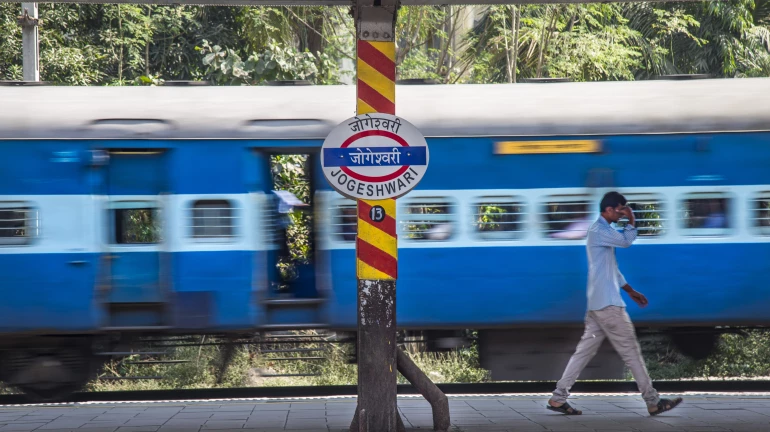


The construction of the new Jogeshwari terminus in Mumbai has been delayed, and completion is now expected only by 2027. The postponement has been attributed to design revisions and infrastructure upgrades that have expanded the scale of the original project. Although the delay may be seen as a setback in the short term, a more ambitious transport hub is now being planned, and a stronger long-term role is being assigned to the terminus within Mumbai’s railway network. Once completed, the station is expected to be positioned as an important additional terminal, through which pressure on already overloaded stations such as Borivali, Churchgate, Mumbai Central, Bandra, and Dadar may be reduced.
A project cost of ₹69 crore has been attached to the terminus, and construction has already been underway for nearly two years. Earlier in February 2026, it had been stated by Western Railway officials that steady progress was being made. Contractors had also been instructed that the pace of work should be increased, and it had been targeted that around 70 to 75 percent of the project should be completed by the end of March. However, with new design changes being introduced, the project timeline has now been extended, and a later completion target has effectively been accepted.
Under the revised plan, the scale of the terminus has been increased. The earlier proposal for three platforms has been replaced by a four-platform design, and wider platforms are also being provided. Platform number 4 has been designated to function as the home platform. It has further been planned that the terminus should be capable of handling 24-coach trains, while nearly 12 pairs of mail and express trains are expected to be operated from the station daily. Through these changes, a greater operational role is being prepared for Jogeshwari than had first been imagined.
Accessibility and passenger circulation have also been given strong importance in the redesign. A 6-metre-wide foot overbridge is to be constructed so that direct connectivity may be provided between the terminus and Ram Mandir station. Escalators and a lift are also to be installed so that senior citizens and Divyang passengers may be better supported. In addition, a wider 12-metre foot overbridge is to be built within the station so that movement between platforms may be made smoother and safer.
A more modern passenger experience is also being planned. Air-conditioned waiting lounges, a VIP lounge, retiring rooms, dormitories, food outlets, and staff rest areas are to be included in the project. As a result, the station is not merely being developed as a railway stop, but as a fuller transport and passenger service centre.
An additional advantage is being created through location. The Jogeshwari Metro station on Metro Line 7 has been situated less than 300 metres away, and because of this, better last-mile connectivity is expected to be achieved. Travel between suburban rail and metro services is likely to be made easier, especially for commuters moving across the western belt from Andheri to Mira Road.
The broader railway modernisation effort in Mumbai has also been linked to this development. In March 2026, it was informed in the Lok Sabha by Union Railway Minister Ashwini Vaishnaw that 34 platforms in Mumbai’s suburban network were being lengthened so that 15-coach local trains could be operated. It was also stated that projects worth ₹33,000 crore were being implemented under the Mumbai Urban Transport Project to improve safety and reduce overcrowding. Alongside this, automatic doors were said to be being installed in 238 suburban trains so that the risk of passengers falling from overcrowded coaches could be lowered.
Taken together, the delay of the Jogeshwari terminus project may be viewed not only as a construction setback, but also as part of a larger reworking of Mumbai’s transport future, in which more capacity, better connectivity, and safer commuting are being prioritised.


 Share
Share Tweet
Tweet