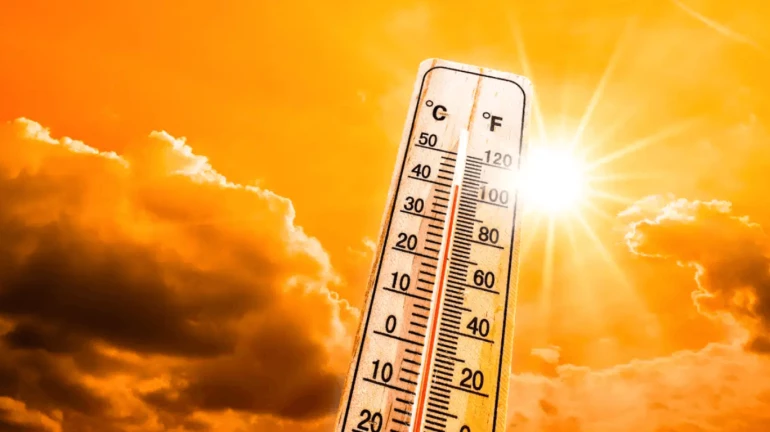


The Maharashtra State Government has released three comprehensive Standard Operating Procedures (SOPs) under the State Heat Action Plan, in line with color-coded heat alerts issued by the India Meteorological Department, to safeguard citizens from heatwaves.
State Disaster Management Minister Girish Mahajan said the measures are aimed at reducing heat-related illnesses and deaths, particularly among vulnerable groups such as informal workers, miners, and low-income communities.
The SOPs primarily focus on 15 high-risk districts, including Latur, Amravati, Yavatmal, Washim, Akola, Buldhana, Nagpur, Wardha, Chandrapur, Gondia, Bhandara, Jalgaon, Nandurbar, Dhule, and Nanded.
The first SOP provides guidelines for outdoor workers such as street vendors, construction workers, traffic police, sanitation staff, delivery personnel, and rickshaw drivers. Measures include rescheduling work hours, mandatory water breaks, setting up water booths, distributing ORS, providing shaded rest areas, and strengthening healthcare services, based on IMD’s yellow, orange, and red alerts.
The second SOP focuses on workers in coal mines in Chandrapur, addressing heat stress management. It includes provisions for cooling rest centers, adequate water supply, improved ventilation, better work planning, job rotation, training to identify heat-related illnesses, and special facilities for women workers.
The third SOP emphasises heat-resilient housing and climate-sensitive urban planning. It includes thermal improvements in homes, adoption of cool roofs, expansion of green spaces, and structured planning across immediate, medium-term, and long-term timelines.
Immediate measures include heat-risk mapping, targeting vulnerable populations, public awareness campaigns, cooling centers, and low-cost thermal improvements like reflective roofs, shading, and ventilation. Medium-term steps involve integrating heat-resilient designs into housing schemes like PMAY, building by-laws, and master plans. Long-term strategies focus on state building codes, climate-sensitive zoning, and equitable access to temperature-resilient infrastructure.
The SOPs also stress inter-departmental coordination, regular reviews based on feedback from health centers and workers, and representation of informal workers. Emergency contact numbers, including district control rooms (1077), ambulance services (108), and police helplines (112/100), have been circulated.
These SOPs will be implemented through agencies such as District Disaster Management Authorities, municipal corporations, Public Works Department, Urban Planning Department, MHADA, CIDCO, and other local governing bodies.
Also Read: India Tightens Traffic Rules: Strict Action for Repeat Offenders Under New 2026 Amendment


 Share
Share Tweet
Tweet