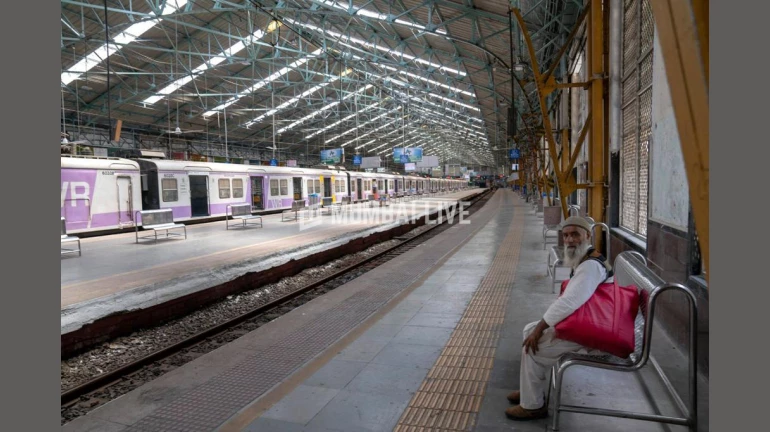


A new study by IIT Bombay’s civil engineering department shows that about one in three people in Mumbai live in areas with poor access to public transport. This means around 3.95 million residents, or 31.8% of the city’s population, have limited access to buses, metro lines, or suburban trains.
The research was carried out by Professor Gopal R. Patil, Dr. Rakhi Manohar Mepprambath from A*STAR in Singapore, and IIT-B research scholar Manish Yadav. The team mapped how easily people can reach public transport in different parts of the city.
The study found that 6.5 million people, or 52.2%, live in high transit-gap zones. These are areas where the demand for public transport is much higher than the supply. Another 1.7 million people, or 13.6%, live in transit deserts. These are places where the need for public transport is high but actual access is extremely low.
The report notes that slum residents face the worst conditions. Only 17.3% of people living in slums have good access to transport. In comparison, 31.4% of the non-slum population has good access. Overall, the researchers state that 31.8% of Mumbai does not have access to transport at a good level.
The team used three measures to study the issue:
1. Public Transport Accessibility Levels (PTAL) were used to check how well areas are connected based on distance to stations, service frequency, and reliability.
2. Transit gaps were used to compare the number of people who need public transport with the availability of services.
3. The Social Vulnerability Index (SVI) was used to understand which groups face more social and economic challenges.
One of the key findings was the strong link between high social vulnerability and low access to transport. The study found that 32.5% of people who are extremely vulnerable live in places with high transit gaps and low PTAL. These people rely heavily on public transport but have the least access to it.
The study also highlights a clear geographic divide within the city. Southern and western Mumbai have dense networks of trains, buses, and metro lines. These areas include more affluent neighbourhoods.
In contrast, northern and eastern parts of the city face major transit gaps and poor accessibility. These regions have large populations of industrial workers and slum dwellers. PTAL scores are especially low in wards such as M East (Govandi), P North (Malad), S (Bhandup), and T (Mulund).
People in gap zones face long walks to bus stops, irregular train frequencies, and heavy crowding. The researchers say that simply adding more routes or stations will not solve the issue. They suggest targeted steps for areas with the lowest PTAL and SVI scores. They recommend giving priority to wards with larger vulnerable populations.
They also call for better coordination between agencies such as the Mumbai Metropolitan Region Development Authority and the Brihanmumbai Municipal Corporation (BMC). The team notes that new metro lines are helpful, but they must link better with local networks to improve first- and last-mile access.


 Share
Share Tweet
Tweet