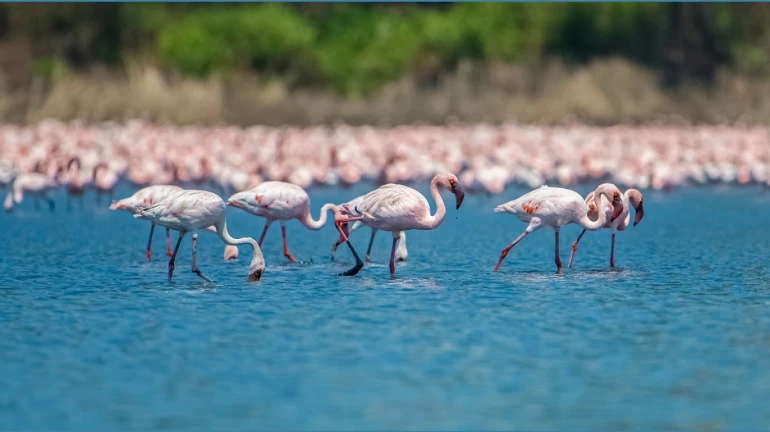
A delayed arrival of flamingos in the Mumbai Metropolitan Region (MMR) has been observed this season, with significantly reduced numbers being recorded compared to previous years. The migration, which is typically witnessed between October and November, has taken place several months later, prompting concern among environmentalists and bird observers.
It has been reported that both Greater and Lesser Flamingos have been sighted in areas such as Thane Creek Sanctuary and the Bhandup Pumping Station over the past week. Movement patterns have indicated that during high tide, the birds have been shifting to elevated wetlands in Navi Mumbai, including regions like TS Chanakya and DPS wetlands, where suitable feeding conditions are still available.
The delay has been largely attributed to extended monsoon conditions in Gujarat, where the flamingos are known to originate. It has been explained that prolonged rainfall caused the birds to remain dispersed across Gujarat instead of migrating at their usual time. Only after temperatures began to rise were the flamingos gradually drawn toward Mumbai’s coastal wetlands. A notable decline in population has also been recorded. While the MMR has historically hosted over two lakh flamingos annually, estimates this year have suggested a sharp reduction to nearly 25,000 birds. Observers have indicated that this is one of the most significant drops in recent years, with a similar delay having been documented only once in the past decade.
Environmental degradation has been identified as a major contributing factor. Wetlands in Navi Mumbai have reportedly been subjected to pollution, land reclamation, and obstruction, resulting in stagnant water bodies and excessive algae formation. It has been highlighted that such conditions make it difficult for flamingos to identify mudflats from above, which are essential for feeding. Concerns have also been raised about shifting migration patterns, as flamingos have been observed venturing into alternative locations, including wetlands in Malad. This trend has been interpreted as a response to declining habitat suitability in traditional areas.
Although certain restoration efforts have been initiated, including clean-up activities in select wetlands, the overall ecological condition has remained fragile. It has been cautioned that if the current trajectory continues, the region’s status as a prominent flamingo habitat may be at risk. The situation has underscored the urgent need for sustained conservation measures, with emphasis being placed on wetland restoration and pollution control to ensure the long-term survival of migratory bird populations in the region.


 Share
Share Tweet
Tweet